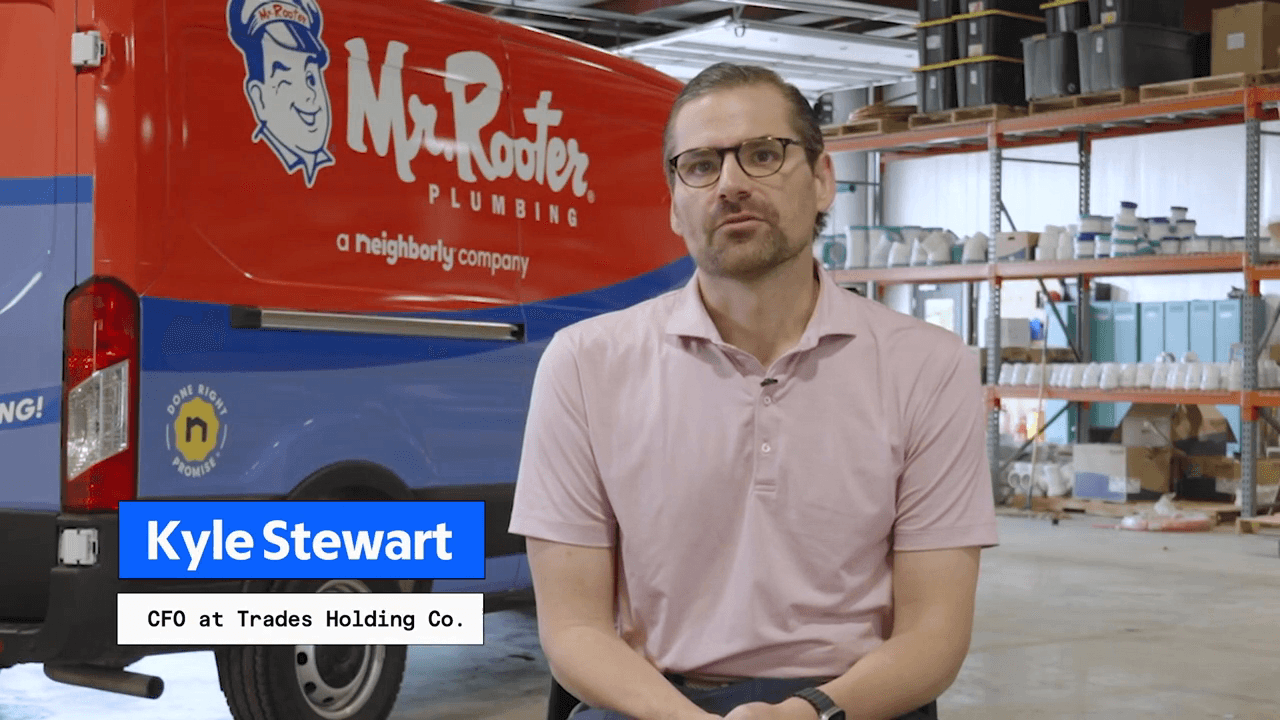

Kyle Stewart is the CFO at Trades Holding Company, a plumbing, electrical, and restoration operator running 13 locations from Cleveland down to Cincinnati and west into Indianapolis.
The company started in 1994 and now averages more than $1.5 million in revenue a week. Headcount has grown to 330, and about 300 of those employees work out of vans.
Fixing the card program became one of Kyle’s defining projects, though not in the direction he intended.

Before: two disconnected cards, paper receipts, and no way to stop a purchase
Technicians needed a way to spend in the field, but the setup Trades had gave Kyle no control over it.
A plumber can’t stock every part on a van, so a run to Home Depot, Lowe’s, or a supply house is often what it takes to finish the job.
The trouble was the card program itself: a corporate card from a regional bank. No controls. Technicians collected physical receipts, and plenty of them went missing. Someone in the office then consolidated what did come back, scanned it into a central folder, and worked through the charges line by line every week ahead of payroll. That took four to five full-time employees, inside a three-day window.
So Kyle’s initial goal was simple: pull every card out of the field.
After: one card, controls that fire before the purchase, and a close measured in clicks
Coast broke the tradeoff Kyle thought he was stuck with: a card in every hand, or control over what gets spent. With Coast, he could set spend limits in advance and stop a purchase before it happened rather than review it after. So he stopped trying to take the cards away.
Coast is now the only card anyone at Trades carries, from the CEO down to the field, for fuel, supplies, and office spend.
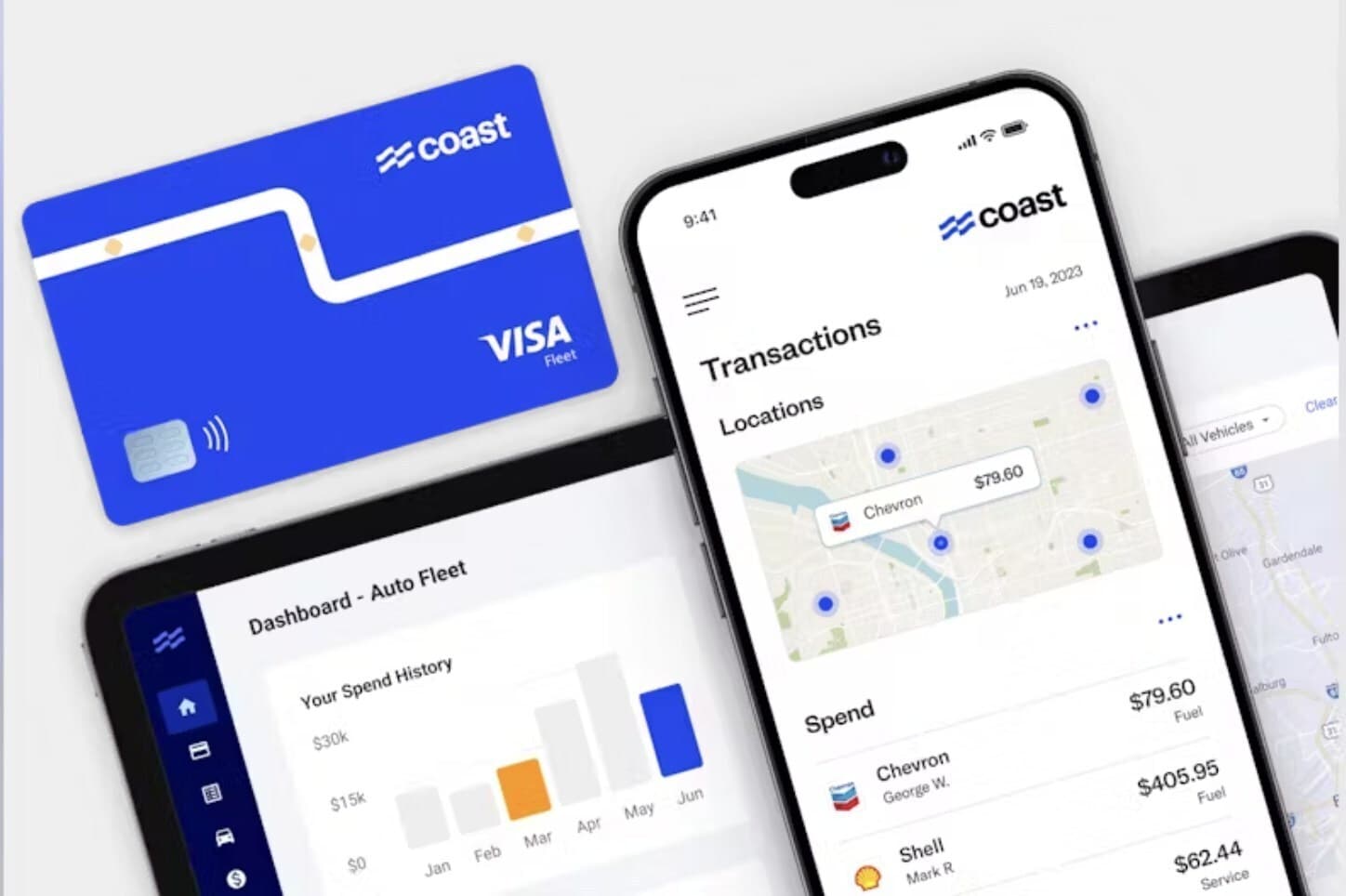
Card management and controls. For maximum control over expenses, Kyle sets budgets by vendor, by merchant category, and down to the individual transaction, weekly or monthly, with policies graded by role: tightest at the entry level, broadest for him and the CEO. When someone runs over budget but still needs to make a purchase, the exception request reaches him by text while the purchase is still pending, so Kyle can review it live.
Fuel card controls and reporting. Kyle moved his previous fuel program to Coast, which gave him fuel data he didn’t have before: what each vehicle actually costs to run. The integration with Samsara blocks suspicious purchases based on GPS location or fuel tank capacity. Fuel spend dropped $10,000 to $15,000 a month almost immediately.
Accounting automation. The close used to mean pulling transactions out of two legacy providers, re-uploading them into QuickBooks, and manually classifying thousands of lines. Coding now happens in the field, at the moment of purchase, by the person who made it. Technicians see what they spent and where, and get flagged for a missing receipt before it becomes accounting’s problem.
Results
- Fuel spend down $10,000–$15,000 a month, showing up almost immediately after the fuel program moved to Coast.
- An 80–100 basis point reduction in commission expense. Trades pays service professionals on revenue less materials, so $100 of missed materials means $25 in overpaid commission. Reliable receipt and job code capture ensured he could tie every purchase to a job.
- A cleaner month-end process, with expenses tied to the right job, and flowing seamlessly to QuickBooks.