

Private equity investment in the home services and trades sector has accelerated dramatically over the past several years. HVAC, plumbing, electrical, and other field service businesses have become some of the most active acquisition targets in private equity, driven by strong recurring demand, favorable fragmentation, and significant opportunities to modernize operations at scale.
As private equity platforms start standardizing core systems, from CRM and dispatch to purchasing and financial workflows, expense management stands out as one of their biggest opportunities. When done right, it delivers immediate improvements to cash flow, visibility, and operational efficiency across the entire platform.
The challenge? Fuel and materials expenses are a huge portion of costs for platforms, but traditional fuel card programs were built for single-entity businesses and generic expense management solutions were designed for office environments, not businesses with significant field operations. No solution addresses the complexity of managing spend across multiple operating companies.
Today, Coast is introducing a solution built for this exact challenge. Coast’s product suite is built for distributed operations, so we understand the friction these businesses face as they scale. With true multi-entity architecture, parent-level visibility, and the flexibility operators need day-to-day, Coast for Private Equity gives home services and trades platforms a modern foundation for financial and operational efficiency.
The challenge: Scaling expense management across multiple operating companies
Scaling a private equity platform in the trades means building an operating system that remains efficient as you grow. Each acquisition brings its own mix of credit cards, expense tracking tools, controls, and processes. What should be a repeatable onboarding playbook often turns into a patchwork of manual workflows, inconsistent policies, and limited visibility.
Traditional fuel card programs and legacy expense tools only add to this complexity. Most fuel cards were build decades ago for single-entity businesses, offering limited real-time data, rigid controls, and little parent-level visibility. Expense management tools, meanwhile, were designed for office environments, not technicians in the field, and often rely on cumbersome reimbursement workflows with minimal integrations into fleet-related tools.
As a result, parent-level finance teams struggle to answer essential questions:
How much are we spending on fuel and fleet expenses? Where? And does it align with policy?
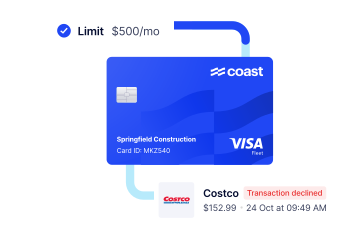
Meanwhile, operating companies are forced into inflexible tools or bogged down by slow customer service just to issue cards or update controls.
Solving the multi-entity challenge with a modern expense management tool, designed for the trades
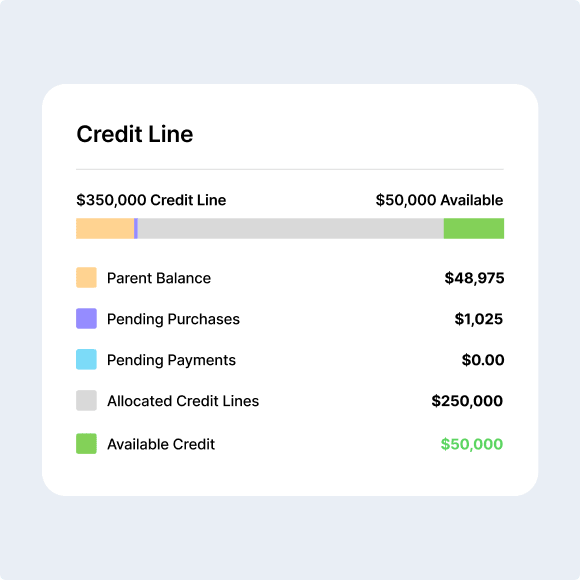
At Coast, we built a solution that helps private equity platforms solve these inefficiencies. Our fuel and expense management solution supports the structure and needs of rollups: a true multi-entity architecture makes it easy to bring multiple companies and new acquisitions into a unified system. A shared credit line eliminates repetitive underwriting, helping businesses get up and running faster.
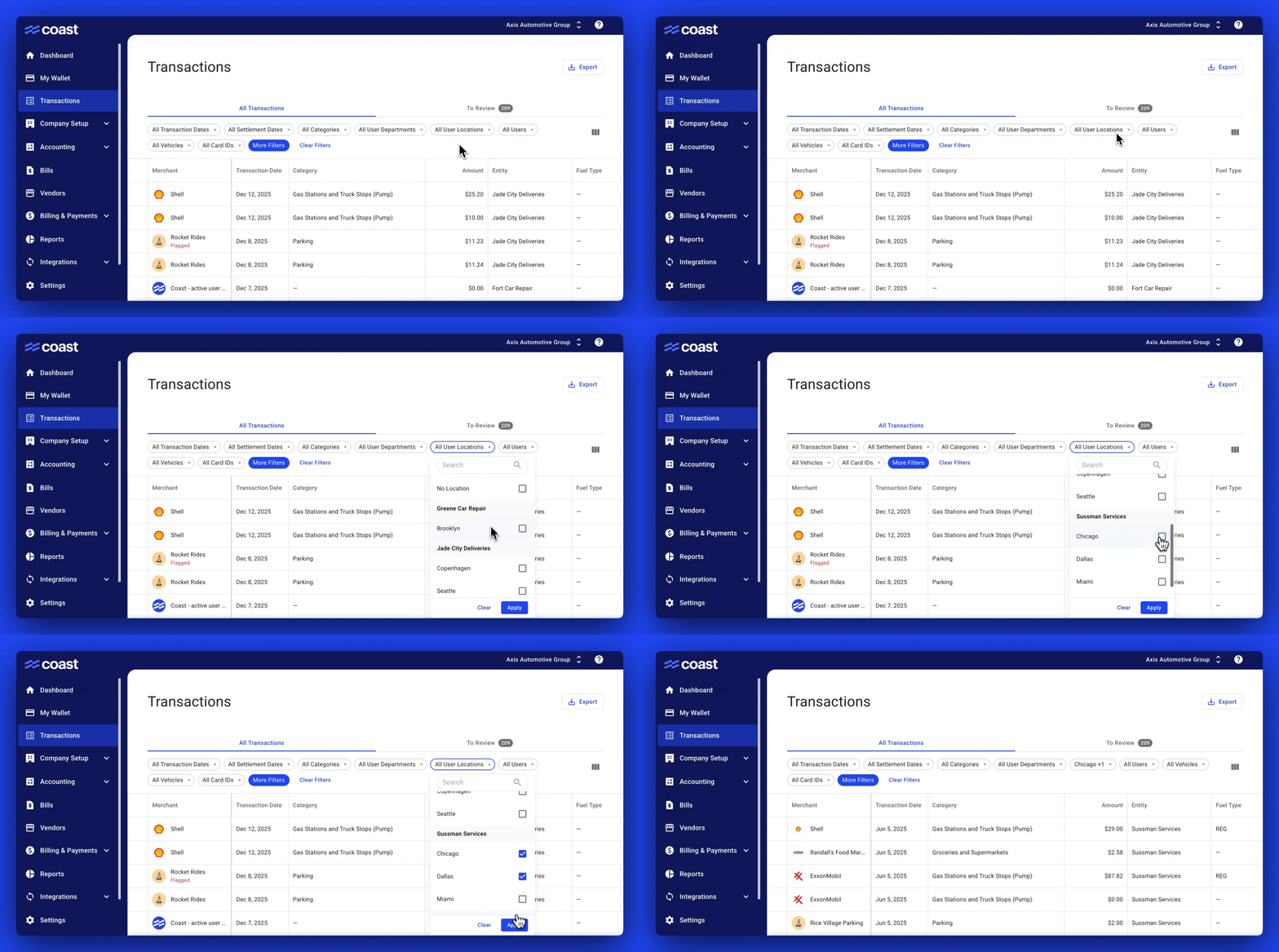
Coast gives parent organizations real-time visibility across every operating company through a central dashboard, while each entity still maintains autonomy to set controls, manage cards, and run day-to-day operations.
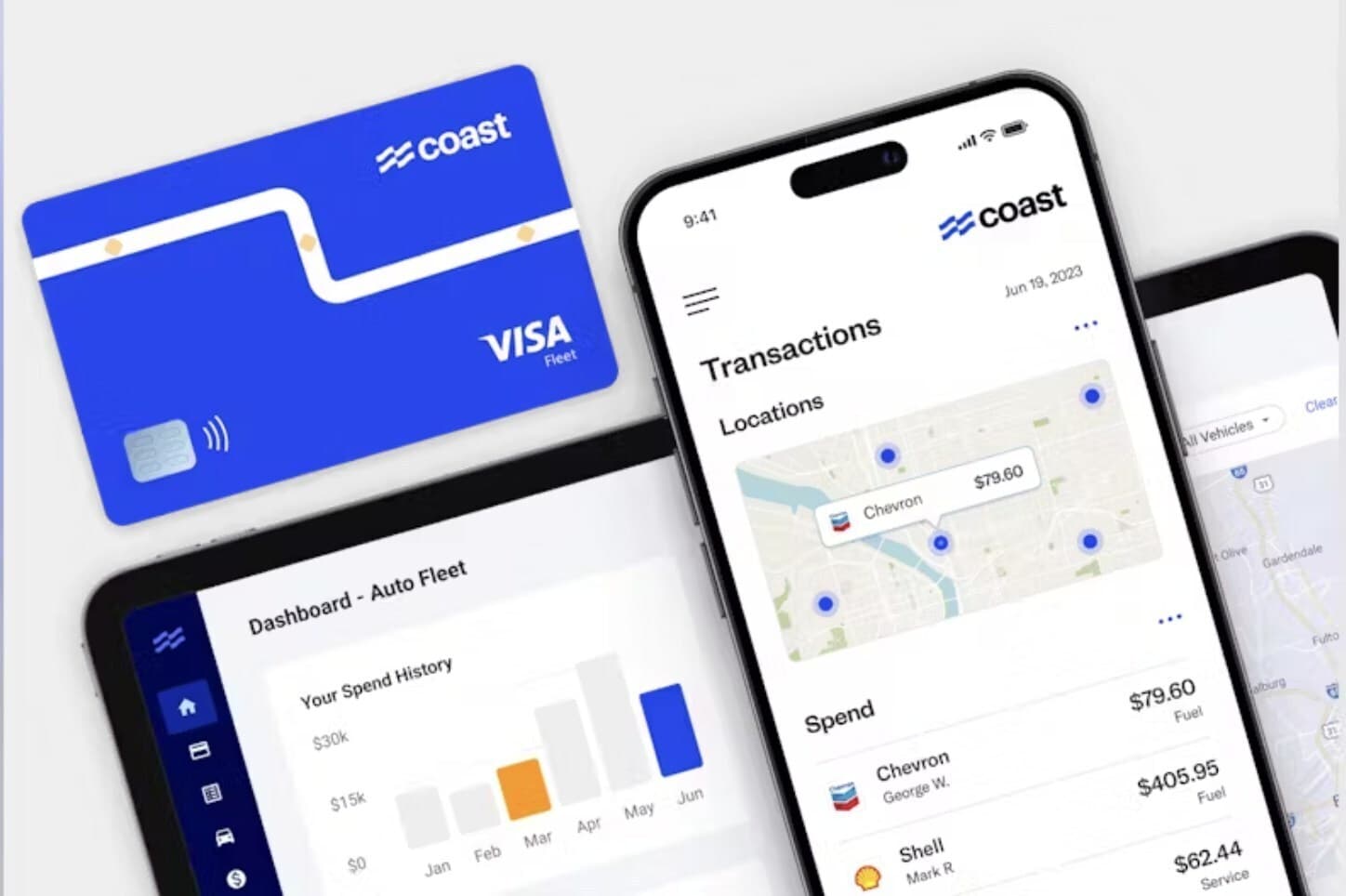
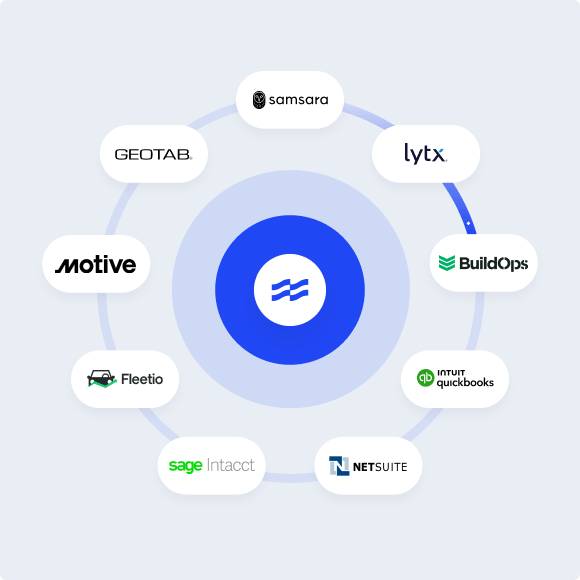
With best-in-class integrations across telematics, fleet management, field service management, and accounting tools, Coast significantly reduces the manual work that drains time from finance teams.
A solution designed for the reality of private equity platforms, proven by operators like Columbia Home Services
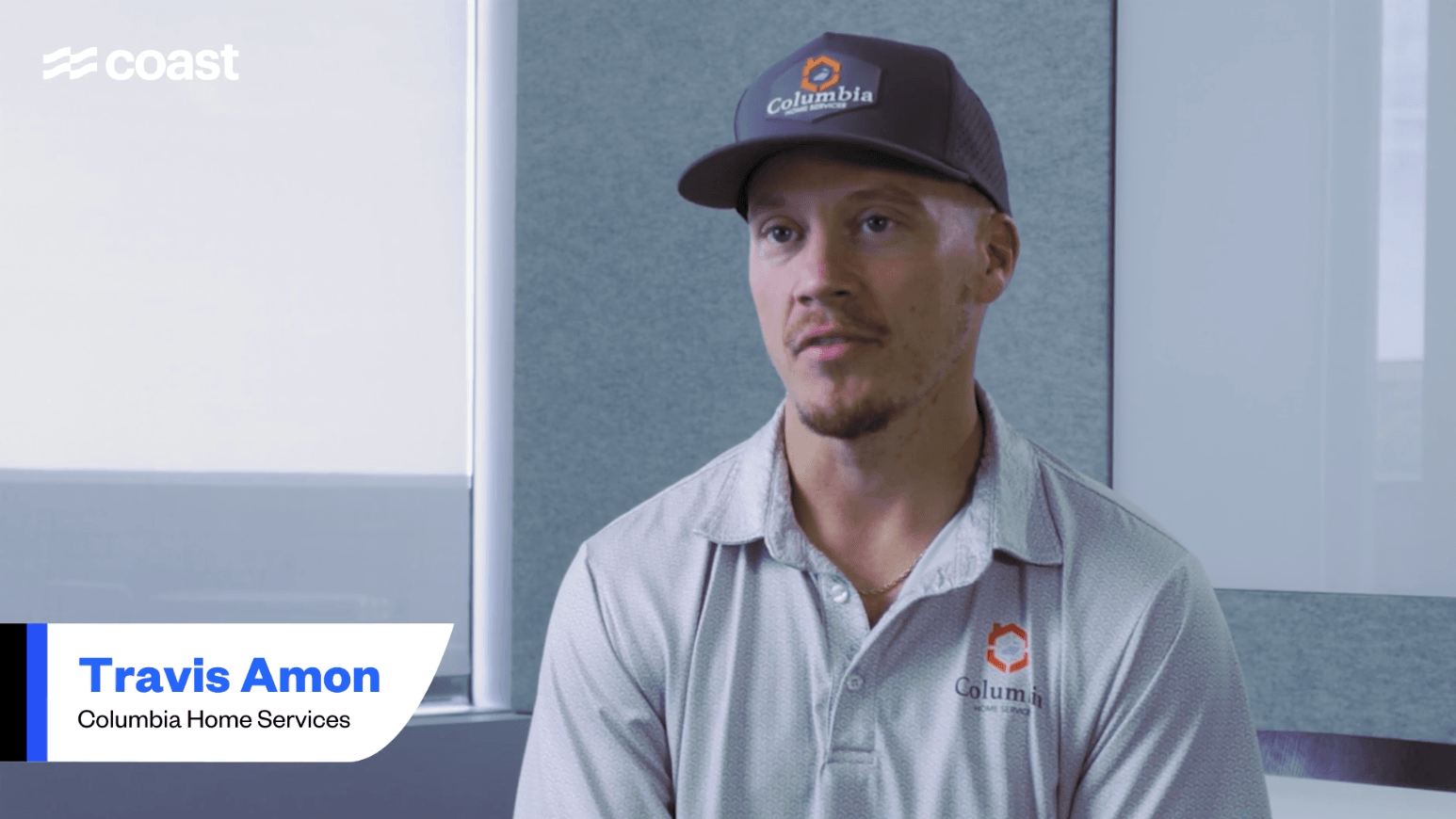
Columbia Home Services (CHS) illustrates what’s possible when a private equity platform implements the right expense management solution. CHS oversees a growing portfolio of 15 businesses and more than 750 employees, most of whom are technicians working in the field. As they expanded through the acquisition of P1 Services Group and others, CHS found itself managing multiple fuel and expense programs, with no unified system and no real-time visibility into costs. Their back office team spent hours reconciling spend every month, often looking backwards and always chasing receipts.
Once they switched to Coast, their financial operations transformed. Through deep integrations with their accounting and fleet tools, CHS reduced reconciliation time from hours per entity to minutes across the entire platform. A single parent-level dashboard replaced fragmented reports. Operators gained flexible card management without delays. Receipt capture, fuel controls, and spend policies all came together in one seamless system.

With Coast, private equity platforms like CHS can onboard new entities faster, enforce consistent spend policies, reduce fraud and waste, and cut administrative burden, all while giving operating companies the autonomy they need to run.
We’re excited to bring this to private equity platforms looking for expense management built for scale, not just growth.
Bring greater efficiency to your operating companies