


Fuel prices have been climbing for more than a month, with real pain at the pump hitting our customers’ bottom lines. For businesses that live on the road—construction crews, field service technicians, passenger transportation drivers — every cent they spend on fuel matters.
We surveyed 217 fleet operators across a range of industries to understand how they feel about the price increase and, more importantly, what they’re doing about it. The results paint a picture of industries under pressure, improvising in real time, and weighing some difficult trade-offs.
Concern is running high
40% of fleet operators rated their concern about fuel prices at 10 out of 10.
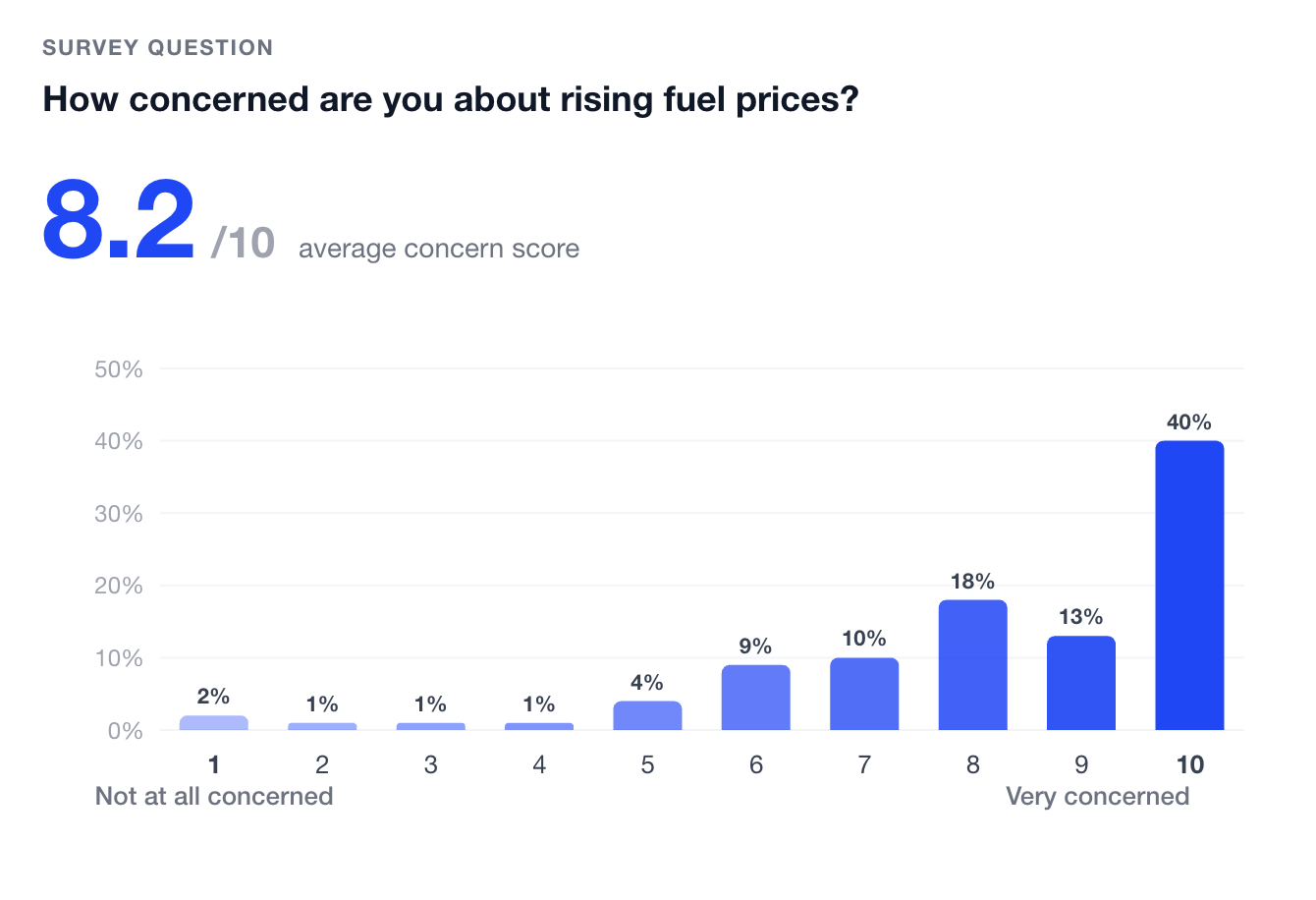
Fuel costs are usually a predictable expense category. The sharp, sudden increase is what’s driving the alarm.
Unlike office-based companies that can absorb fuel costs as a minor line item, businesses with fleets rely heavily on driving to generate revenue. Fuel isn’t an operating expense they can trim or defer. It’s the price of showing up for their customers.
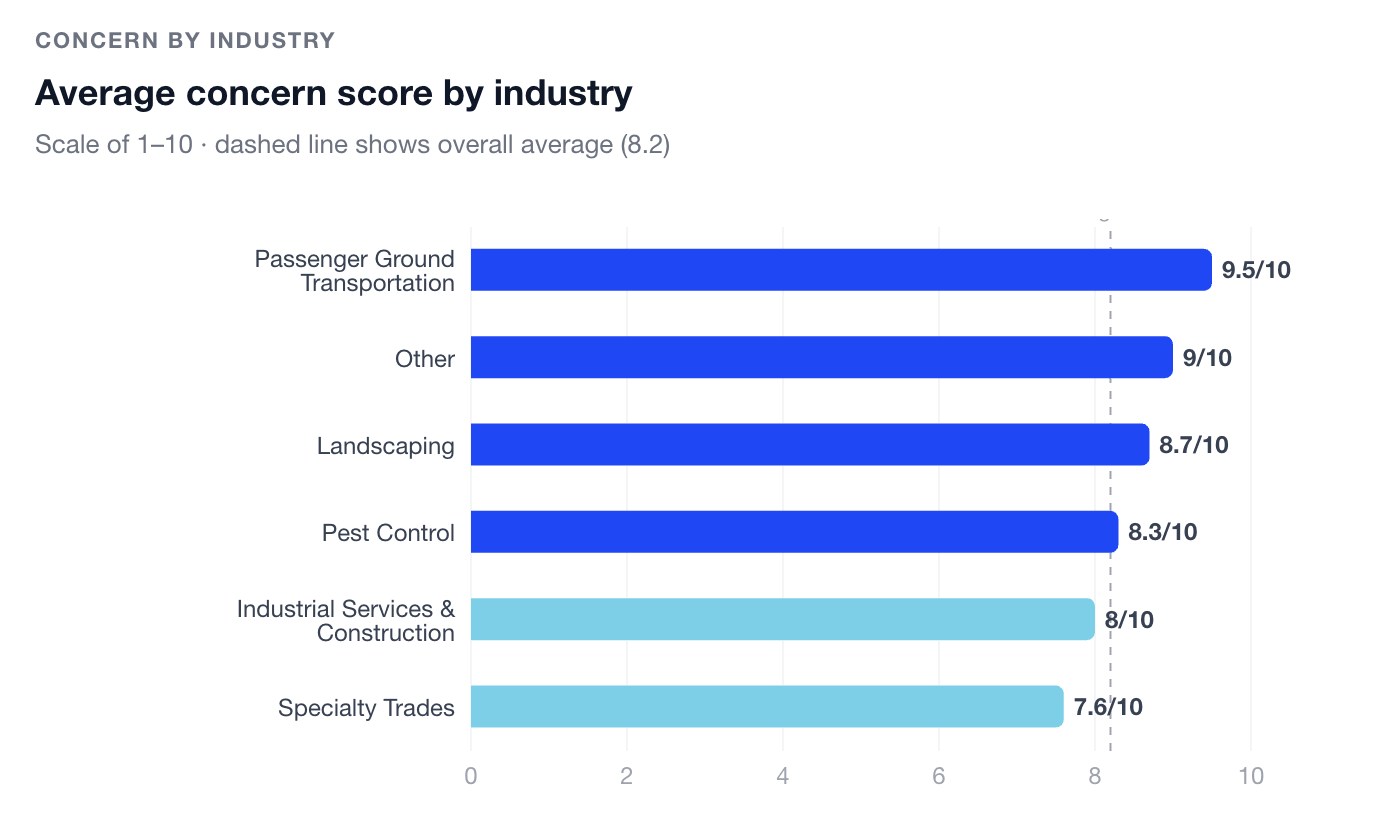
Unsurprisingly, concern is highest among the industries that burn the most fuel. Passenger Ground Transportation leads at 9.5 out of 10, followed by Landscaping and Pest Control, sectors where vehicles are essentially the product. The more a business depends on miles driven to generate revenue, the less buffer it has when fuel prices spike.
Most businesses are already changing how they operate
Only 14% of respondents are not planning to respond to rising fuel prices. The remaining 86% are either already acting (35%) or actively exploring options (51%).
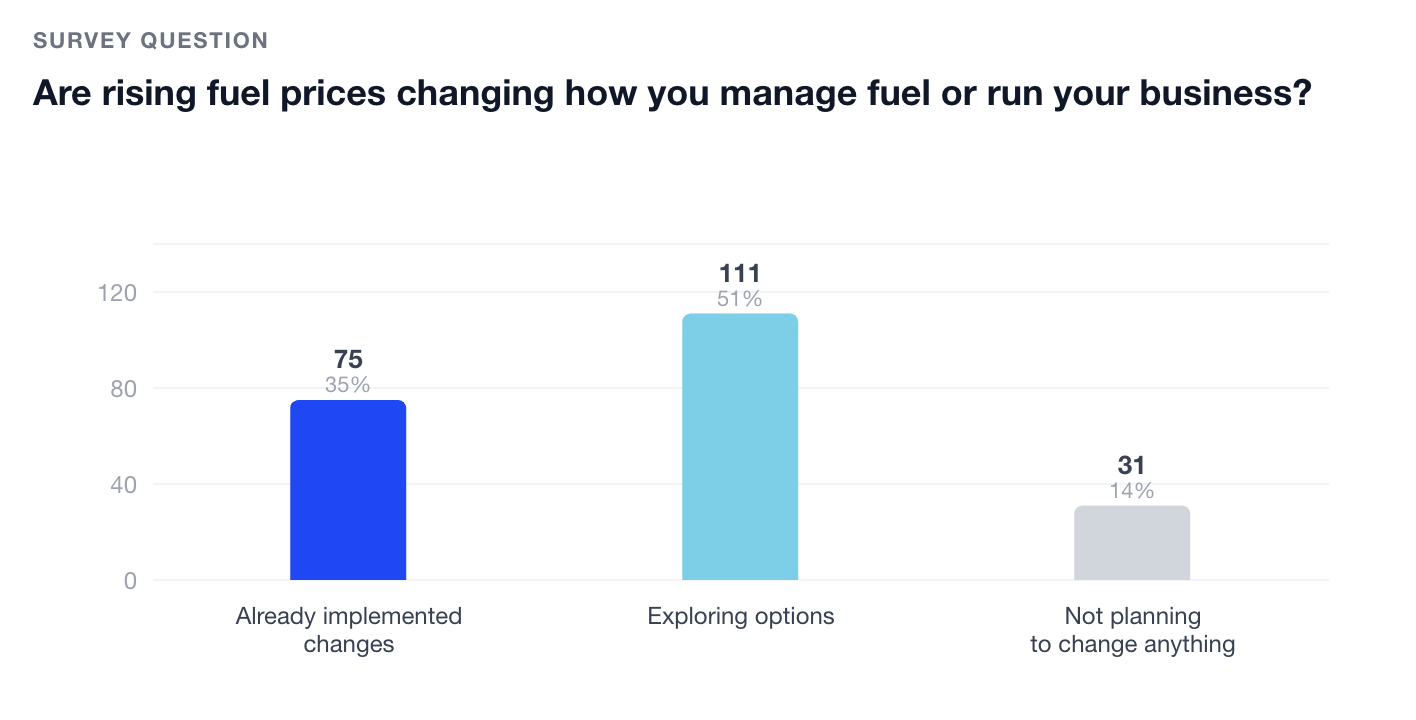
For such a recent event, and concerning an expense that only represents a small fraction of their operational costs, this response shows how seriously field businesses consider the issue.
Fleet operators are taking the situation seriously, and are leveraging multiple angles to mitigate the cost.
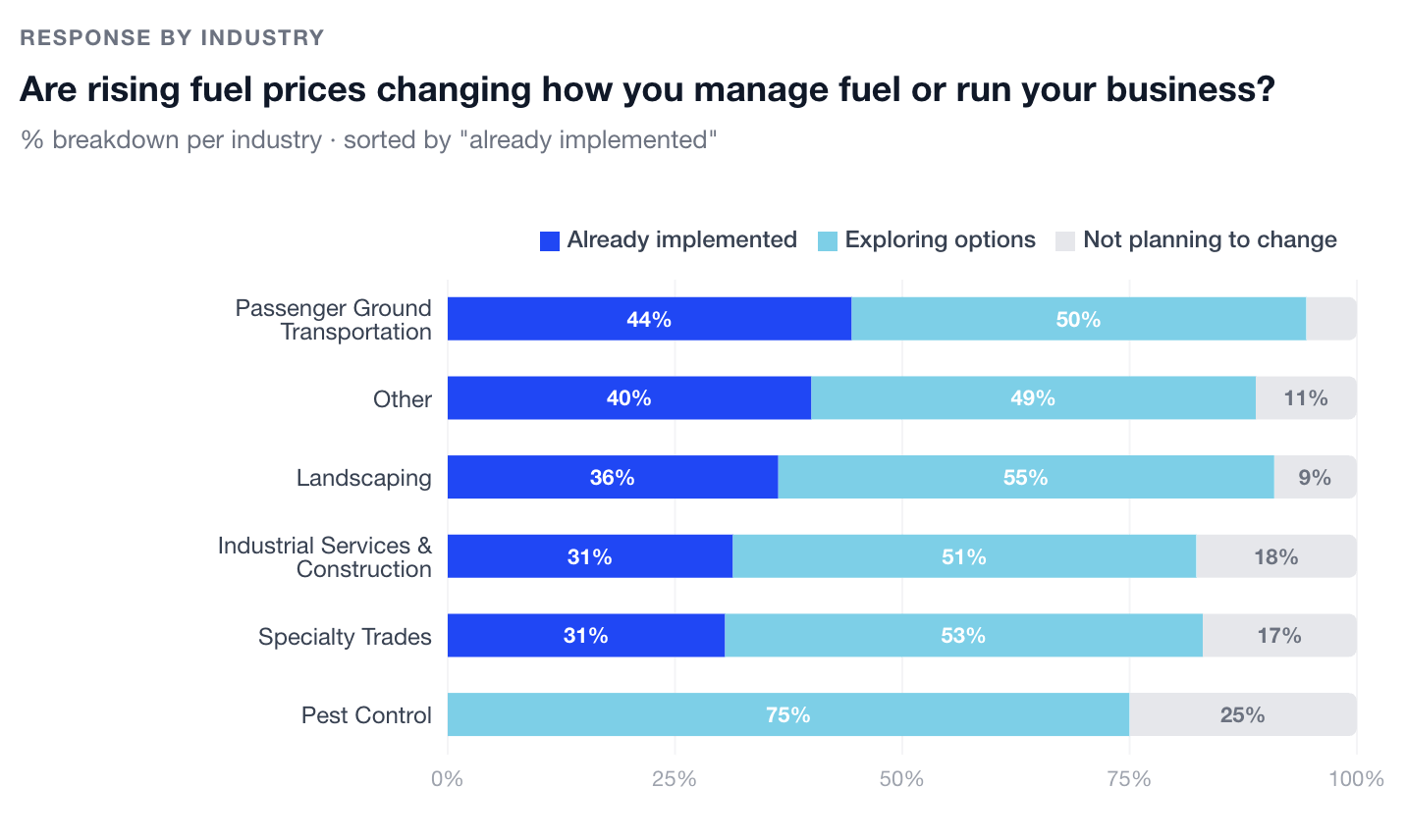
The industries moving fastest are the same ones feeling the most pain.
Passenger Transportation leads on action too, with 44% already having implemented changes, likely because passing a fuel surcharge on to customers is more straightforward in that industry than in trades or construction, where contracts and competitive pressure make price increases harder.
Specialty Trades and Construction, which together make up the largest share of respondents, are taking a more cautious approach, with around 30% already acting and a larger share still watching and waiting.
Fuel efficiency measures: the first line of defense
Among those who have already made changes, the most common measures are operational and immediate. Businesses are focused on reducing how much fuel they use:
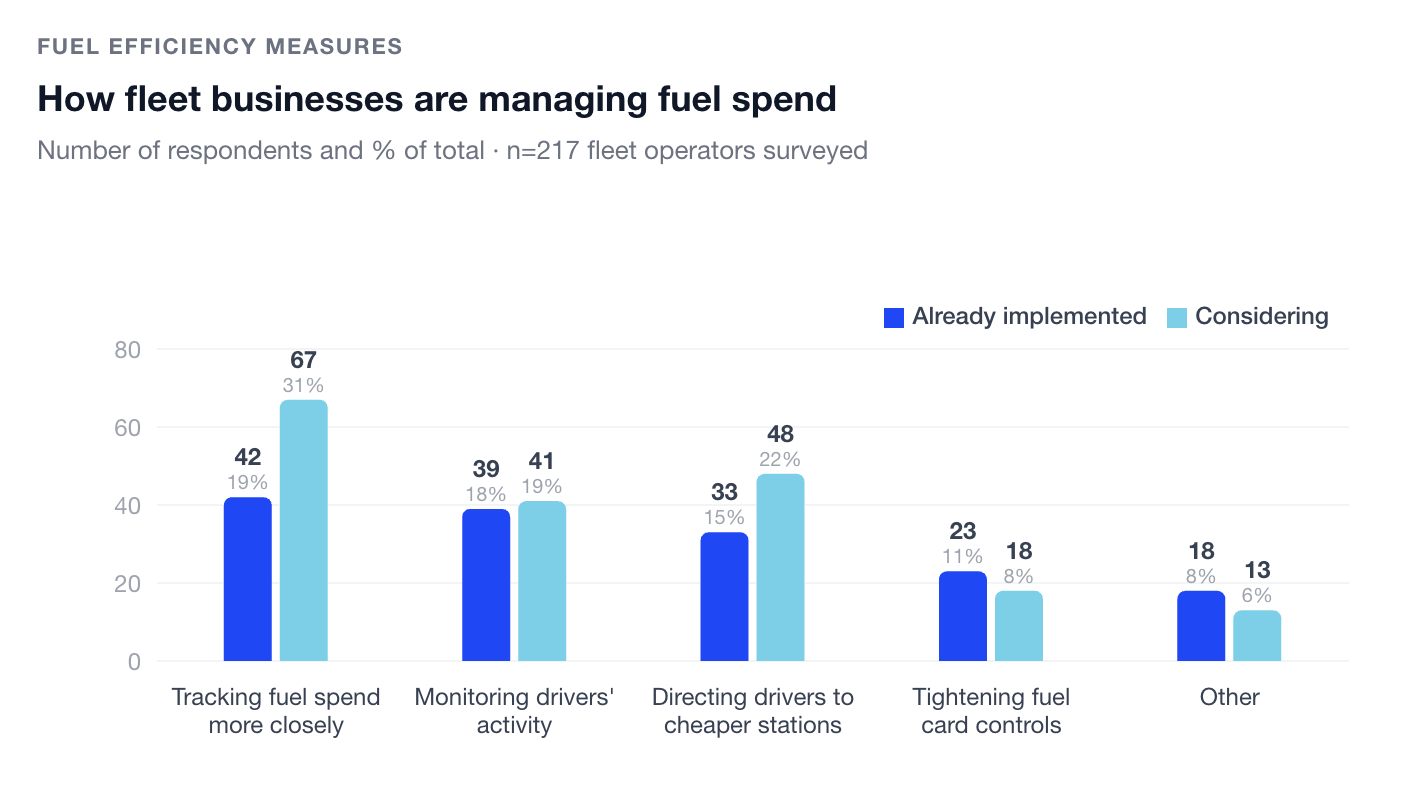
- Tracking fuel spend more closely is the number one measure — getting visibility on where money is going before trying to cut it
- Monitoring driver activity — identifying inefficient behaviors like excessive idling or suboptimal routes
- Directing drivers to the right station — routing teams to lower-cost fuel stops
- Tightening fuel controls — to ensure drivers are not using the company fuel cards for their personal use
Beyond these top four measures, respondents described a range of more creative responses.
- Route optimization: Some are tightening routes and working more locally.
- Doubling up technicians in vehicles: Others are doubling up technicians in a single vehicle to cut trips,
- Relying on personal vehicles more: hiring part time drivers with their own vehicle.
- Cashflow optimizations: One operator mentioned filling up only half a tank and making more frequent stops, as a way of spreading the cash flow impact.
- Fuel station optimization: are optimizing their fuel card rebates, making sure they’re extracting every available discount.
- Driver incentives: one customer mentioned running a competition for the employee with the lowest average cost per gallon every quarter.
Business-level responses: surcharges, cutbacks, and hard choices
Beyond fuel efficiency, businesses are also rethinking how they structure their services and staffing. The most common measures being implemented or considered:
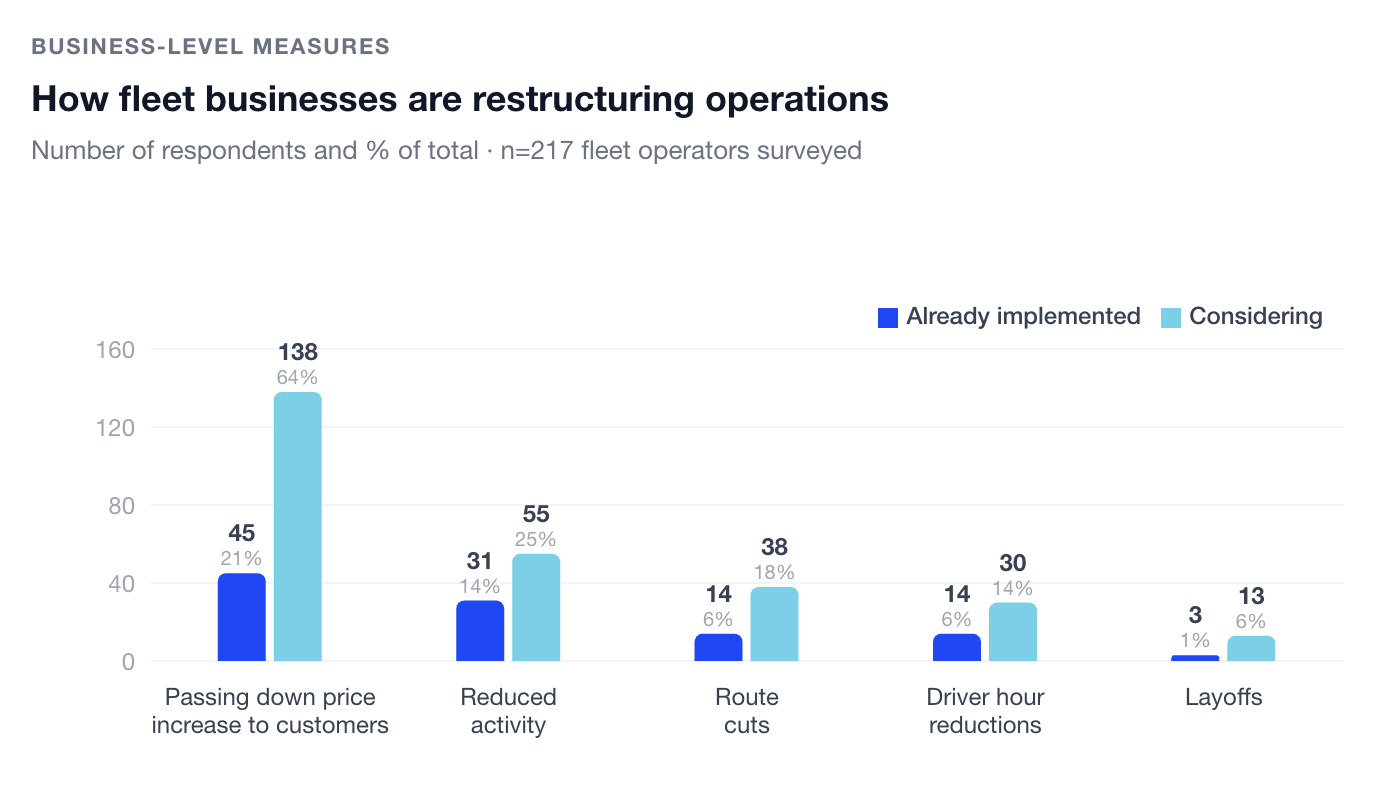
Cost pass-through is the preferred first move and the one that’s perceived as the easiest way to offset their cost, but operators are also willing to shrink their footprint if necessary. All of these responses would have significant implications for these businesses and their customers.
Cutting down activity and slowing down hiring
Almost 1 in 2 respondents have already reduced activity or laid off workers (16%), or are seriously considering it (31%).
The timing couldn’t be worse for fleet businesses. This is the start of the busy season, the period when most fleet businesses in construction and trades are ramping up.
Seasonal hiring typically accelerates in spring, and the effects of reduced activity could extend beyond individual businesses to the broader labor market, particularly in regions where construction and trades represent a significant share of employment.
The surcharge question: a last resort
Fuel surcharges are on the table for most operators, but they’re being treated as a last resort, and not something they do lightly.
Price increases are the most common measure businesses have already taken, but even more are considering implementing surcharges.
For operators weighing it up, our fuel surcharge calculator shows exactly what the fee would add per mile, which often makes the number easier to justify to customers.
But the reluctance is real, and most businesses are absorbing the cost for now, until this is no longer sustainable. Respondents cited not wanting to burden their customers as the primary reason for holding back.
“We really do not want to have to increase prices for our customers as we know they are dealing with the price increase along with everyone else.”
“Trying to hold off as long as possible on implementing a surcharge, hoping that something gets resolved and prices go back down.”
The wait-and-see approach is widespread. Most operators are absorbing costs for now, betting that the situation resolves before they have to make harder calls.
EVs: on the radar, but barely
Rising fuel costs are nudging some fleet operators to think about electric vehicles, but only at the margins.
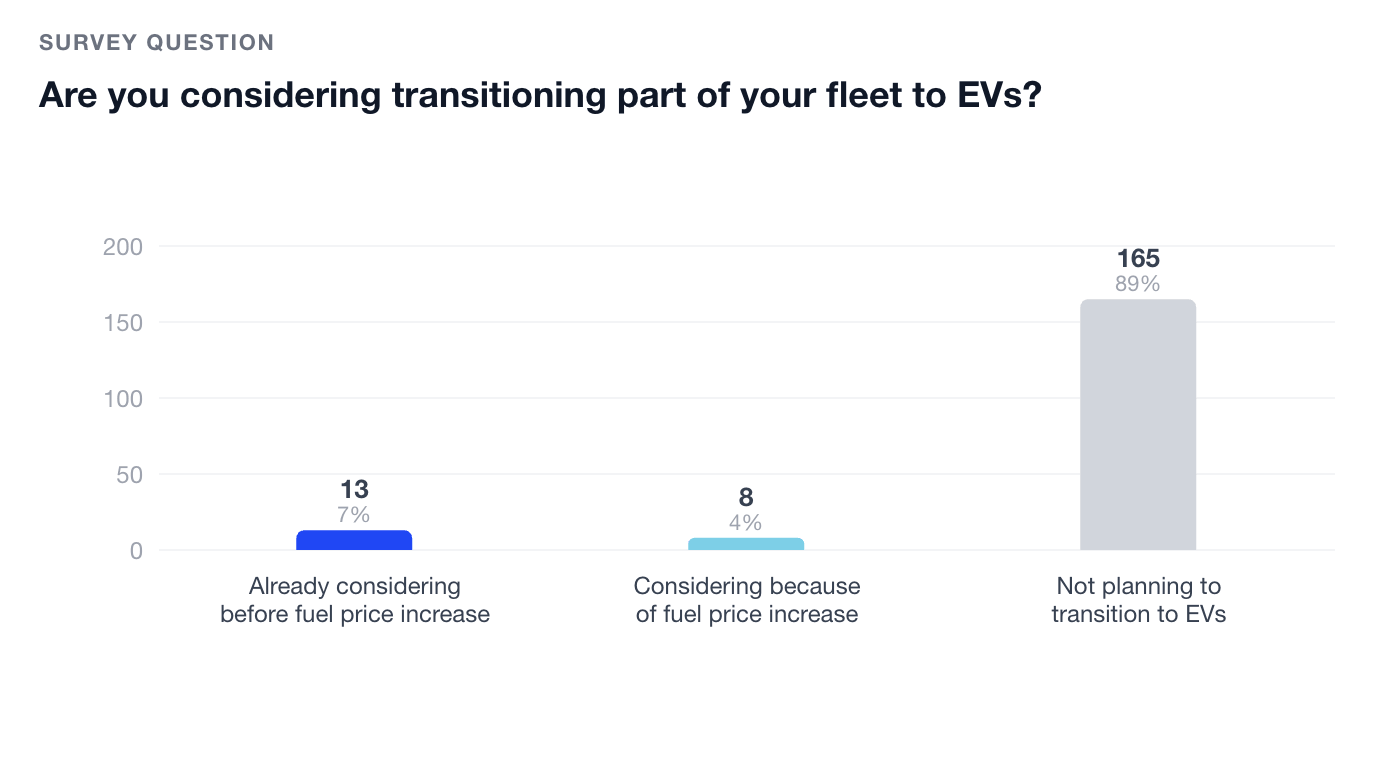
4.3% of respondents said the price increases are making them reconsider their fleet composition in favor of EVs.
Interestingly, our survey drove some strong answers on how EVs are not the right solution for trades and transportation.
The hesitation is less about interest and more about infrastructure. Fleet operators depend on reliability. An EV that can’t be charged reliably on a job site or during a long service day isn’t a solution.
“I won’t transition our fleet to EV until I can rely on the charging infrastructure as much as I can for ICE engines.”
Several respondents flagged hybrids as a more pragmatic near-term option.
“We cannot support going to EV’s currently, but hybrid engines are helping”
Until the charging network catches up with the demands of field-based work, EV adoption among fleet businesses is likely to remain limited, regardless of fuel prices.
For some, it’s just the cost of doing business
Not every fleet operator is in crisis mode. A meaningful share of respondents, those in the 14% making no changes, view fuel price increases as an unavoidable feature of their business, not a problem to be solved.
Their reasoning falls into two camps.
The first is pragmatic acceptance: they have customers to serve, and they’ll find a way to cover costs.
“Fuel is unfortunately required for my business. If I want to continue selling installs, I have to continue driving to get to jobsites.”
The second is a bet on timing: some believe this is a temporary spike, not a structural shift.
“Forecasts suggest gas prices will settle out within 3 months.”
Whether that optimism proves warranted remains to be seen. But for now, it’s giving some businesses the confidence to hold their current course.
What this tells us
Fleet businesses are under real pressure, and they’re responding with a mix of operational creativity, careful customer management, and, for some, patience. Time will tell.
To prevent more severe consequences on activity and profitability, every construction, trades, and transportation business should take a hard look at their fuel bill. If a surcharge is on the table, our fuel surcharge calculator shows what it works out to per mile.
Fuel prices have risen by 25%, but there’s significant room to offset that through smarter operations: choosing the right gas station, tightening controls, optimizing fuel card rebates, and monitoring vehicle efficiency and driver behavior. Most businesses have more margin for improvement than they realize. The best-positioned operators are already finding it.
If you want to join the 35% of fleets already acting, Coast can help. Get started today by finding out how much you can save by switching to Coast.