

A travel and expenses policy (T&E policy, for short) is a crucial document for any business that has employees working in the field, on the road, or otherwise away from the home office.
Businesses with these policies use them to keep costs under control, prevent fraud and theft, and comply with legal requirements.
In this article, we walk you through a step-by-step process for writing a T&E policy, discuss some of the best practices for putting it all together, and provide a template to help you get started.
Key Takeaways
- A T&E is a set of guidelines that your business creates to monitor and control costs incurred by employees while conducting business away from their usual workplace or when entertaining clients and/or business associates.
- Crafting an effective T&E policy involves outlining the core principles, detailing the approval procedures, listing acceptable and unacceptable expenses, explaining the process for submitting expense reports, and ensuring employee buy-in and adherence to the policy.
- Best practices include striving for clarity, providing plenty of detail about documentation requirements, socializing your policy, paying attention to employee feedback, and keeping your policy up to date.
How To Write A Travel And Expense (T&E) Policy

1) Outline The Core Principles
The core principles of your T&E policy include your company’s stance on things like compliance and transparency. Address and explain each of these topics at the beginning of your policy, before you get into the details of your guidelines and proceses.
2) Detail The Approval Procedures
For daily spending within a certain dollar range, you may not require approval. But, for travel and large expenses (that are often planned ahead of time), detail how to obtain approval before the spending occurs.
3) List Travel And Entertainment Expenses
Specify acceptable T&E expenses, including:
- Modes of transportation (e.g., air, rental cars, taxis, public transportation, etc.)
- Accommodations
- Mileage and fuel
- Meals and entertainment
4) List Expenses That Will Not Be Reimbursed
While listing acceptable expenses is important, it is equally (if not more) important to list expenses that will not be reimbursed.
This includes things like personal expenses, guest travel, traffic violations and fines, lost or stolen personal items, unauthorized upgrades, and excessive or lavish spending.
Listing these expenses helps employees get a clearer picture of the goods and services that the business considers acceptable.
5) Detail The Process For Submitting Expense Reports
Make this section as detailed as possible so that expense reports are correct, on time, and are as accurate as possible.
Be sure to include information on what documentation is required for reimbursement (e.g., receipts, expense report form, etc.), submission deadlines, approval process, and reimbursement timeline.
6) Ensure Adherence To The T&E Policy
You can ensure adherence to your T&E policy by stating that compliance is mandatory, outlining the consequences of non-compliance, indicating policy review and update timelines, and verifying that the employee has read, understood, and agreed to the T&E policy.
Best Practices For An Effective T&E Policy

Strive For Clarity
Ambiguous language can lead to confusion and unnecessary spending. At the same time, overly restrictive language can hinder necessary business spending and frustrate employees.
Be as clear as possible about approval workflows, and strive for clarity at all times.
Provide Plenty Of Detail About Documentation Requirements
You need documentation requirements that work for both your team and your business. Be very specific about what constitutes good documentation (e.g., an itemized receipt) and what constitutes bad documentation (e.g., a packing slip).
Socialize Your T&E Policy
“Socializing” involves getting employees comfortable with the rules and procedures included in your T&E policy.
The goal is to get 100% buy-in and full commitment for the initiative (whatever it may be) and, ultimately, to convert those who are uncertain into policy supporters.
Pay Attention to Employee Feedback
Failing to pay attention to employee feedback can result in a policy that’s difficult to implement. Some employees may consider it unfair, deficient, or incomplete in some way.
Keep Your T&E Policy Up To Date
Several factors can affect your policy, including business needs, compliance regulations, and external market forces.
Failing to monitor and adapt to these changes can result in an ineffective policy that doesn’t address the real-world needs of your employees in the field. Review your T&E policy at least once a year to keep it as up-to-date as possible.
T&E Policy Template
Start building your T&E policy by adding title material (e.g., company name, effective date, version, and review date), and then crafting the following sections:
- Policy statement
- Scope
- General principles
Here’s an example of these items.

Next, outline your travel guidelines. Be sure to include things like authorization and specifics about air travel, accommodations, and ground transportation.

Next, list any expense categories that apply to T&E spending (e.g., meals and entertainment, communication, office supplies) as well as any and all expenses that your business won’t reimburse.

Next, write down everything your employees need to know about submitting expense reports and reimbursement.

Finally, describe what happens when policy violations occur, and write the acknowledgment/signature portion of the document.

That’s your T&E policy in a nutshell!
Effective Expense Management With Coast

Take control of your T&E policy and your entire expense management system with Coast’s powerful and easy-to-use tools designed to help your business save money and reduce risk.
- Digitized expense policies: Replace your paper spend policies and enforce them automatically as employees spend. With Coast, you can easily control what your employees can purchase. Choose the categories and merchants where they can shop, and determine precise spend limits.
- Mobile receipt and job code capture: Employees take a photo of the receipt and enter a job code right when they make a purchase.
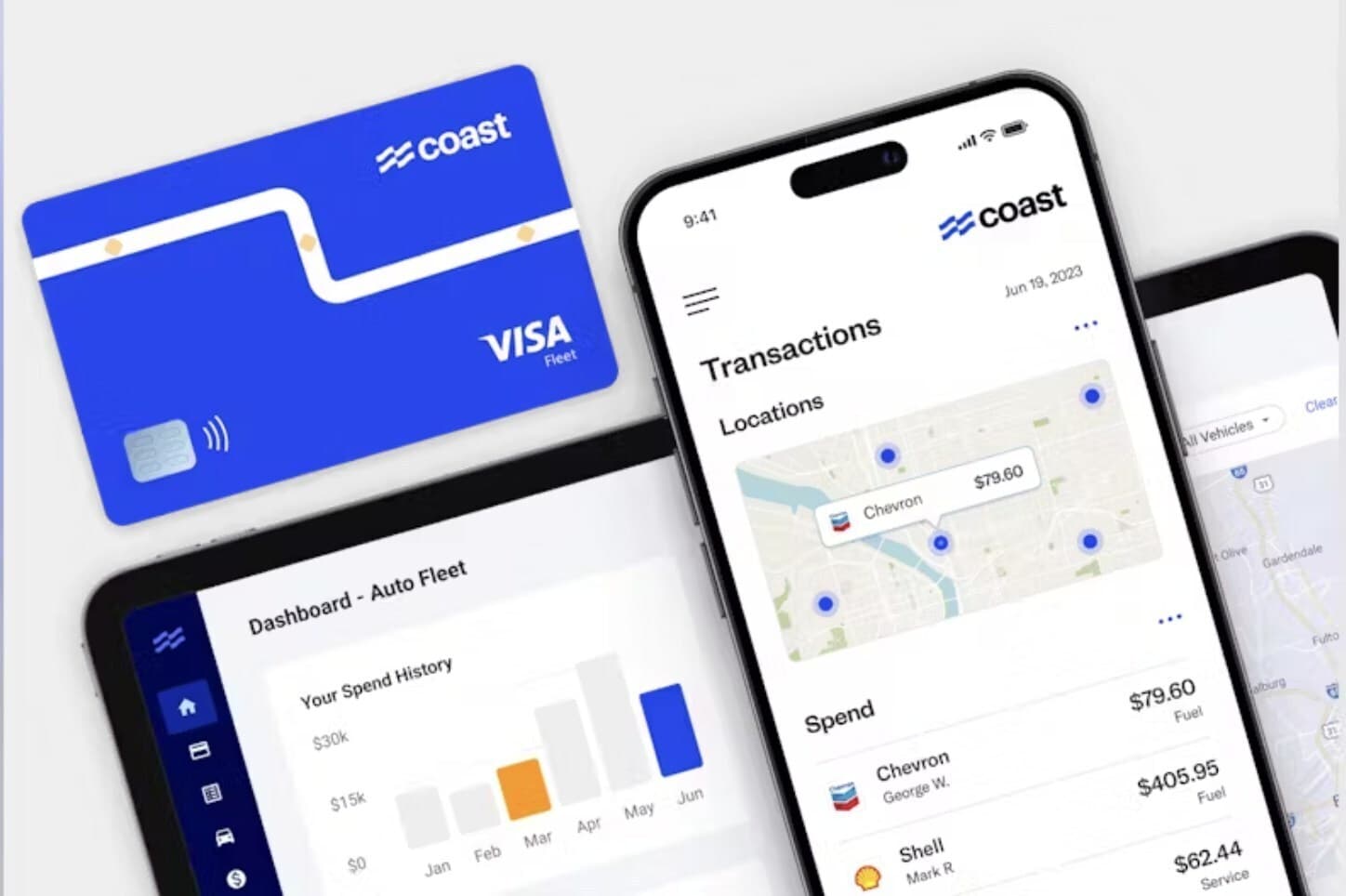
- Real-time reporting and notifications: Get instant visibility into transactions, monitor spend as it happens, and spot issues before they impact your budget.
- Seamless accounting integrations: Coast connects with systems like QuickBooks Online, so you can quickly review, categorize, and export transactions without manual entry.
To learn more about how Coast can help your company, visit CoastPay.com today.