


As your company grows and fuel costs and fraud risks rise, choosing the right fleet card matters more than ever. Below, we break down 6 of the cheapest fleet and fuel cards available today, and what makes each one worth considering.
How We Chose The Best Cheap Fuel Cards
We put 25+ cheap fuel cards for business under the microscope, looking past marketing claims and into real user feedback.
We also reviewed unfiltered operator feedback on fuel leakage, weak controls, misleading rebates, and reconciliation pain. Cards that solved these problems without creating admin headaches made the cut.
These were the non-negotiables during our evaluation process:
Pricing that holds in real life
Cheap on paper often falls apart in practice. We studied rebates, fees, and discounts against realistic fleet sizes and usage patterns, eliminating cards with hard-to-hit tiers, confusing fee structures, or penalties that inflate costs.
Protection against everyday misuse
Most losses come from card sharing, overfills, and unauthorized non-fuel purchases. That’s why we prioritized cards that offer robust protection against fuel theft with off-hour fueling or out-of-area transaction alerts.
Business fuel cards that couldn’t proactively flag or block these behaviors didn’t make the list.
Field-level control
Most fuel card problems start when rules don’t hold up outside the office. We prioritized cards that let businesses control where, when, and how drivers fuel, by location, time, merchant type, and spend limits, without slowing crews down or creating workarounds.
Visibility and reporting
Delayed or vague reporting is where misuse hides. We favored fuel cards that surfaced transaction details quickly, while issues were still fixable.
Fits real routes and job sites:
Wide network claims don’t matter if stations aren’t on routes crews actually drive. We sought strong coverage near job sites, service corridors, and suburban routes to minimize costly detours and downtime.
Low admin burden:
We favored discount fuel cards that simplify reconciliation, produce clean invoices, and reduce back-and-forth between ops and finance.
Responsive support:
Fuel cards with slow support, poor dispute handling, or unclear escalation paths were marked down, especially for operations that run early mornings or late evenings.
Using these factors, we narrowed the field to the business fuel cards that hold up where others fail.
The 6 Best Fuel Discount Cards (For Cheap Gas and Rebate Rewards)
Below are the best fuel discount cards we confidently recommend based on our evaluation.
Every card here earned its spot by enforcing controls in the field and holding up under real fleet usage.

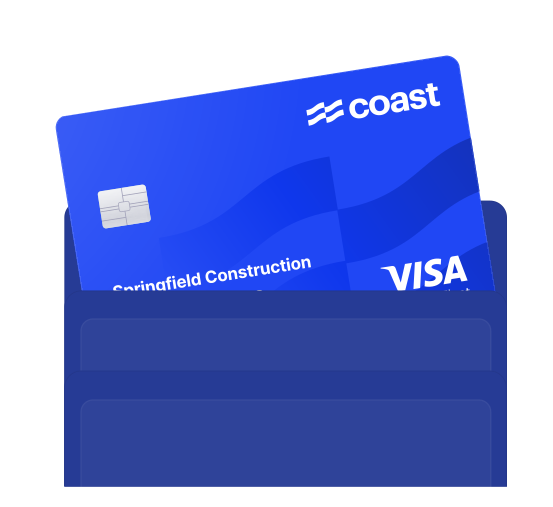
1. Coast
Coast’s fuel discount card gives commercial fleets strong spend control and visibility over fuel spend.
It works anywhere Visa is accepted, meaning drivers don’t have to worry about detours or downtime. You can also use this cheap business fuel card for maintenance, tolls, and material purchases.
On top of that, you get to unlock savings that don’t depend on hard-to-hit rebate tiers. Coast offers 3¢–9¢ back per gallon at over 30,000 stations and 1% cash back on non-fuel purchases. That’s just the start.
Coast gives fleet managers hands-on control by letting them set rules by driver or vehicle, limit where and when the card can be used, and require receipts or job codes for larger purchases.
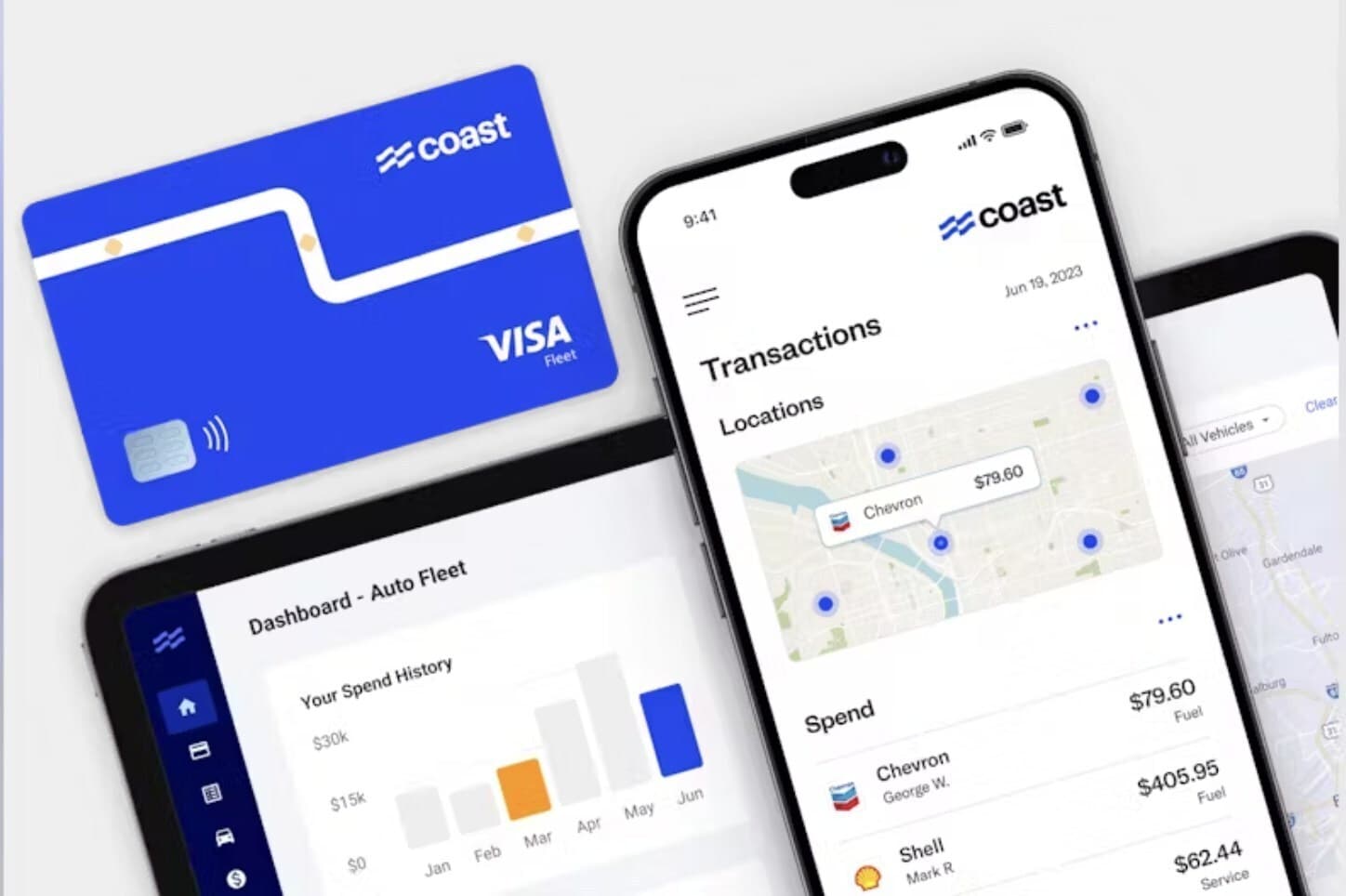
All activity shows up instantly on the dashboard with full line-item detail. And this visibility goes beyond transaction data.
Coast’s business fuel card integrates with telematics systems to connect fuel spend directly to vehicle behavior.
You can spot unusual fuel use and track miles per gallon, thanks to the platform automatically pulling mileage data from telematics and matching it to fuel transactions.
Coast verifies if a vehicle was at the fuel station through GPS checks and validates fuel volume with tank insights, closing two of the most common fuel misuse gaps.
With these measures, Coast shuts loopholes that cheap business fuel cards leave behind, making fuel spend verifiable and controlled.
Coast backs its controls with a $25,000 annual fuel-fraud guarantee covering both external and employee fraud (Terms apply).
- 3-9¢ per gallon at 30,000+ stations
- Fuel anywhere Visa is accepted
- Advanced spend controls and real-time reporting
- Connect fuel data with telematics, fleet management platforms, and accounting systems
- Lock and unlock cards from mobile to prevent PIN misuse or theft
- Use as a fully controlled corporate card at no added cost
- Easy-to-use dashboard with fast and reliable support
- $25,000 annual fuel fraud guarantee for both external and employee fraud
- Purpose-built for local service fleets rather than long-haul trucking
- Best fit for fleets with at least five vehicles
- No prepaid card option available
2. Wex
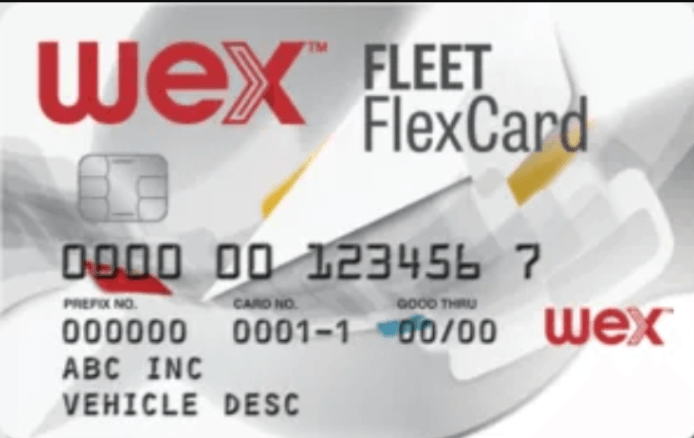
WEX offers a wide range of business fuel cards for all sizes of fleets in the U.S. Its cards work at 95% of fuel stations nationwide and more than 45,000 maintenance locations. You can choose between charge cards paid off monthly or opt for cards with revolving credit, depending on what fits your cash flow.
Savings with WEX tend to scale with usage. Larger fleets that buy more fuel each month typically qualify for higher rebates, while smaller operators may see lower savings unless they plan routes around in-network stations.
Beyond savings, you can also control spending with set product restrictions, dollar caps, and time-of-day rules to reduce off-policy spending. WEX offers customizable reporting tools for transaction details, tax summaries, and spend trends.
Some cards may offer introductory rebates that taper off over time, and higher ongoing discounts may require full monthly payment. It’s also worth checking local coverage, since every fuel station may not accept WEX fuel discount cards.
- Accepted at 95% of fuel stations and 45,000+ maintenance locations in the U.S.
- Advanced spend control features
- Customizable reports for tracking transactions, taxes, and spending trends
- Not all local fuel stations may accept the card
- Introductory rebates may phase out over time
- Rebates may not apply at Tier-1 truck stops or major big-box retailers
- Savings depend on monthly fuel volume tiers
3. Fuelman
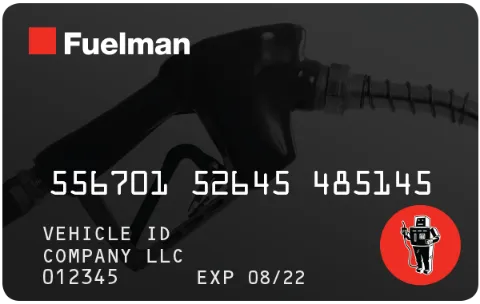
Fuelman’s business fuel cards are designed for businesses looking for predictable fuel spending with firm control over spend.
The Mixed Fleet and Diesel Fleet cards deliver strong network-based savings across 40,000+ Fuelman network stations.
You can also use these cards for maintenance expenses. However, you may end up paying an extended network fee when you make purchases outside that network.
Fuelman lets you track spend by driver or vehicle, set product and dollar limits, shut off cards through the mobile app, and receive real-time alerts for suspicious activity.
They also offer fraud protection, with coverage up to $10,000 per card and $25,000 per year. Advanced features like maintenance tracking, Fuelman’s fraud guarantee, and custom dashboards are available only on higher-tier plans.
- Fuel anywhere MasterCard is accepted
- Real-time fraud alerts and spend control features
- Discount network of 40,000+ fueling locations
- Out-of-network fueling may trigger a $3 fee, and local acceptance may vary
- Rebates require full, on-time invoice payment
- Lower-tier plans do not support maintenance management or payment programs
4. Comdata
Comdata’s fuel card ecosystem is built for trucking-focused fleets, ranging from small operators to large, multi-vehicle businesses running at scale.
They offer multiple card types depending on fleet size and cash-flow needs.
Larger operators can use options like the OnRoad Card for driver funding and large-scale fleet spending.
They can also opt for the Comdata Mastercard for broader acceptance across fuel, maintenance, and electric charging.
Diesel-focused fleets can rely on the Comdata Fleet Card for detailed reporting, spend controls, 24/7 driver support, and access to more than 8,000 fueling locations, including Pilot, Love’s, TA Petro, and AMBEST.
Comdata ChargePass unifies fuel and EV charging payments, with mobile, RFID, and tap-to-pay support wherever Mastercard is accepted.
Fleets not using Mastercard may be limited to truck-stop acceptance, making Comdata less suitable outside trucking.
- Accepted at 95% of gas stations
- Zero truck-stop fees for small businesses
- Strong spend controls and flexible reporting tools
- Acceptance limited to 8,000+ stations without the Mastercard option
- $3 fee on non-preferred fuel transactions
- Delivers the most value for trucking-focused fleets
5. EFS
EFS offers multiple discount fuel cards for trucking and over-the-road operations, providing driver accountability, compliance, and in-network fueling.
At the core is the EFS Fleet Card, which supports strict spend rules, driver and vehicle prompts, and job-code tagging at the point of purchase.
It supports driver and vehicle prompts, job-code tagging, real-time transaction visibility, instant card shutdowns, and integrations with transport management systems and telematics tools.
Their Fleet Mastercard extends the same controls across the full Mastercard network.
Mixed-fuel fleets can utilize the CrossRoads Freight Card, which offers fuel discounts at over 12,000 truck stops across North America and at approximately 95% of retail gas stations.
Smaller fleet operators have the option of Fleet One EDGE, a lighter program that includes built-in discounts on fuel, tires, and repairs.
The standard EFS card is largely confined to a 12,000-location network, and fueling outside that network may trigger additional fees.
Pricing is contract-based, and rebate levels may vary by network. Plus, some advanced analytics and controls are reserved for higher-tier plans.
As a result, local commercial fleets may see fewer benefits compared to trucking-focused operators.
- Cash advances and ATM access tailored for trucking fleets
- Works anywhere Mastercard is accepted for fuel and fleet expenses
- Strong spend controls and security safeguards
- Out-of-network fees apply to EDGE cards
- Designed mainly for trucking fleets, with limited upside for others
- Pricing and rebate tiers lack upfront clarity
6. BP
BP offers two fleet fuel cards in the U.S. designed for fleets that either fuel consistently at BP and Amoco locations or want a mix of branded rebates and broader acceptance.
The BP Business Solutions Fuel Plus Card is built for fleets that primarily fuel at BP and Amoco stations. It offers volume-based rebates at participating locations, with savings tied to monthly fuel usage.
They also offer the Business Solutions Mastercard for businesses that need wider acceptance.
It works anywhere Mastercard is accepted and earns volume-based rebates when drivers fuel at BP and Amoco stations.
Both cards allow fleet managers to require driver IDs and odometer readings at the pump, set limits by product type, dollar amount, time of day, or transaction count, and monitor activity through BP’s online account portal.
They can automatically consolidate transactions, with invoicing and reporting tools that eliminate paper receipts and simplify reconciliation.
Fleets need consistent usage to unlock top rebates, as the strongest savings are tied to volume thresholds at BP and Amoco locations.
Plus, high-risk applicants may also be subject to a risk-based fee on their credit limit.
- Higher rebates at BP and Amoco stations
- Spend controls for reducing off-policy purchases
- Works anywhere Mastercard is accepted
- Business Solutions Plus is accepted only at BP and Amoco
- Full rebates require hitting specific monthly fuel volumes
- High-risk fleets may pay a 2% fee on their credit or spend limit
Choosing Your Cheap Fuel Card
You usually start looking for cheap fuel cards for business when fuel cost becomes a mess.
Spend leaks in the field, visibility comes too late, and finance pays for it at month-end.
The real cheap fuel card is the one that shuts these down, not the one advertising the biggest rebate.
Here’s what to look for as you compare the best fuel discount cards listed above.
Model the real all-in cost:
Cheap cards often make money through fees (setup, monthly, per-transaction, out-of-network), which can quietly erase rebates.
Model the real cost by estimating fuel volume, applying expected rebates, and deducting all ongoing and transaction-based fees.
Pressure-test network fit:
A big network claim is useless if stations aren’t near job sites, yards, or service corridors. If drivers detour to stay in-network, you pay for time, mileage, and downtime.
Treat tiered rebates as volume requirements:
Many programs reserve the best cents-off for higher monthly gallons or specific preferred locations.
If your fleet is 10–100 vehicles but usage varies by season, you want predictable savings at your normal volume instead of a tier you rarely hit.
Prioritize controls that prevent misuse:
Look for product/merchant restrictions, dollar caps, time-of-day rules, and prompts like driver ID/PIN and odometer. The goal is to block off-policy spend before it happens.
Demand fast, detailed visibility:
Strong business fuel cards surface line-item data quickly (who, where, when, gallons, grade, odometer) and trigger alerts for unusual behavior.
Evaluate fraud risk:
PIN-only setups can be vulnerable if PINs are shared or written down, so look for layered safeguards (alerts, geo checks, rapid card shutdown, and clear dispute workflows).
Your card provider’s security guidance and response process matter when something goes wrong.
Score the admin burden:
The cheapest fuel card can still cost you hours if invoicing is messy, exports are weak, or approvals are manual.
Cards that integrate with accounting and telematics data reduce reconciliation time and improve audit readiness.
Curious how much you’d save with the right cheap fuel card? This calculator breaks down real-world savings based on your fuel volume and fees.
Why Choose Coast as Your Next Fuel Card for Business
Coast is designed for fleets that want fuel savings without losing control.
It works anywhere Visa is accepted, meaning drivers don’t need to hunt for specific stations or change routes just to fuel.
At the same time, Coast treats fuel as a controlled expense. You decide what the card can be used for, and everything shows up immediately once it’s spent.
Fuel access without spend creep:
Coast doesn’t trade flexibility for risk. You can allow fuel only, or fuel plus approved categories, while blocking everything else outright.
The result is wide acceptance without opening the door to convenience-store add-ons or personal purchases.
Prevents misuse:
Coast cards use chip security and driver verification. Plus, you can enforce every rule, like location, category, timing, or spend limit, in real time.
When paired with telematics, transactions that don’t line up with vehicle location can be flagged or declined automatically. With those safeguards enabled, Coast backs fleets with a fuel-fraud guarantee of up to $25,000 per year (Eligibility and terms apply).
Get instant visibility:
Fuel transactions appear on your dashboard within seconds, complete with gallons, grade, time, and location.
You can review spending by driver, vehicle, or job, track MPG and cost per mile, and export clean data straight into accounting systems.
Integrates with your existing systems:
Coast plugs directly into tools like QuickBooks, NetSuite, Sage Intacct, Samsara, Geotab, Verizon Connect, and Fleetio. Fuel, vehicle data, and accounting stay in sync automatically.
Pricing doesn’t depend on volume:
Instead of complicated tiers, Coast charges a flat $4 per active user each month. Savings come from consistent per-gallon discounts, often in the 3-9¢ range at 30,000+ stations, plus baseline savings elsewhere. What you see is what you get.
Expands when your needs do:
Coast starts as a fuel card, but it doesn’t lock you there. When you need to manage maintenance, parts, tolls, or other field expenses, you can turn those categories on using the same controls.
If you’re looking for a cheap business fuel card that works everywhere your fleet fuels and still gives finance clean, audit-ready data, Coast fits the bill.
Start an application to make fleet fuel costs work for you.