


Maybe you never used a fuel credit card because reimbursements worked, or you tried one and still saw premium and late-night fills you couldn’t verify. You want to trust your fleet but you also don’t want to be taken advantage of.
It’s a common story for any 20-, 50-, or 100-vehicle fleet in construction, landscaping, or the trades.
Smaller fleets lack the tools and resources to stay ahead of these issues. The pain simply multiplies for mid-sized and larger fleets. More drivers, more transactions, and more chasing down what went wrong. And then there’s the tech gap. Many legacy gas credit cards have no or very basic integrations with your accounting or telematics tools, leaving you with blind spots and manual work.
If any of this sounds painfully familiar, our list of the 10 best fuel credit cards will help you find a setup that gives you control, clarity, and fewer admin hours.
How We Chose The Best Fuel Credit Cards
To separate the best from the rest, we compared over 20 fuel credit cards by looking at reviews from users in real fleet conditions like busy job sites, shifting service routes, early refuels, and late-day reconciliation.
Then, we paired that hands-on testing with insights from fleet managers, owners, and finance teams across construction, trades, landscaping, and passenger transport. They highlighted the same friction points: unsupervised fueling, rotating crews, off-route fueling, downtime, and late-day accuracy slips. Together, the field tests and operator insight shaped which cards made the list.
Here’s more on our methodology:
- Network coverage: Network size is useless if fuel stations aren’t on your route. That’s why we focused on coverage near job sites, service corridors, and suburban clusters. Cards with 90%+ acceptance stood out when we factored in diesel-lane access and the hidden cost of off-route stops.
- Real-time data: Reporting delays are where misuse hides. That’s why we prioritized credit cards that report fuel transaction details like driver, vehicle, gallons, grade, odometer, station, and timestamp in real time.
- Pricing against real fleet volumes: We tested pricing claims by modeling seasonal, high-mileage, and mixed-use fleet types at realistic volumes. Cards with unreachable rebate tiers, scaling or opaque fees, and late-payment terms that increased cost risk didn’t make the cut.
- Fraud and abuse safeguards: We went beyond PIN checks to see how each card responds to real-world abuses like duplicate swipes, over-capacity fills, off-hour or out-of-geo refuels, and card sharing.
- Integration depth and support: We also checked how much manual work each fuel credit card required and how well it plugged into leading accounting and telematics software. Cards with data gaps, disorganized invoices, or unreliable off-hours support failed our evaluation.
Fuel credit cards that delivered on fraud safeguards, real-time insight, network coverage, transparent pricing, and low admin burden were the ones that qualified. Keep reading to find the card that’s the best fit for your fleet.
The 10 Best Credit Cards for Fuel
Here are the best business fuel credit cards we confidently recommend based on our testing. If a card didn’t work for crews in real conditions, it isn’t on the list you’re about to read.

1. Coast
Coast’s fuel credit card is designed for local commercial fleets that want control, flexibility, and visibility into every dollar spent on fuel. Drivers can use it anywhere Visa is accepted. Every gallon earns you 3¢–9¢ back at 30,000+ stations, with no volume tiers or expiry date.
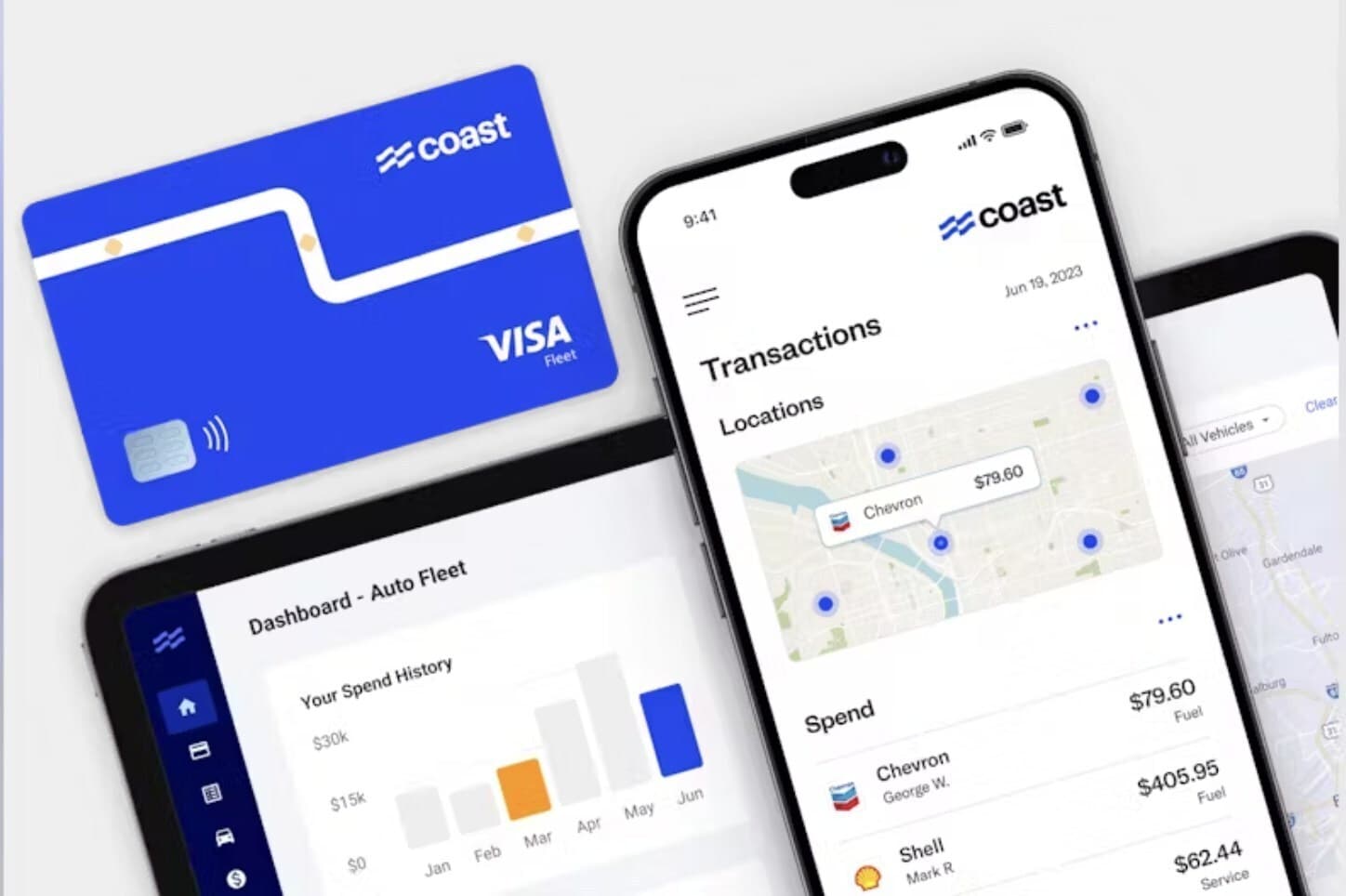
You can also use it for maintenance, parts, tolls, and material purchases. Transactions hit the dashboard instantly with full line-item detail, so you always know who fueled, where, when, and at what cost.
With Coast, admins can:
– Get more granular spend control than many business credit cards for fuel
– Build unlimited spend policies with category blocks, custom limits, and rules by driver, vehicle, or day of week
– Make larger purchases require receipts, memos, or job codes
This all works together to help create stronger compliance, fewer disputes, and better insight into operating costs across the fleet.
Coast’s fuel credit card also integrates with telematics systems. It pulls odometer data from GPS Insight and matches it to fuel transactions to help you track miles per gallon and identify unusual fuel use. Coast also prioritizes security with a $25,000 annual fuel fraud guarantee that covers both external and employee fraud (Terms apply).Rated as one of the top fuel credit cards, Coast wins with its simple online portal, responsive support team, and unified fleet expense management experience.
- 3-9¢ at 30,000+ stations, with rebates on every gallon on your statement
- Accepted anywhere Visa is accepted
- Advanced spend controls and real-time reporting
- Deep telematics, fleet management, and accounting integrations
- Mobile card unlock prevents PIN sharing and theft
- Can double as a controlled corporate card at no extra cost
- $25,000 annual fuel fraud guarantee for both external and employee fraud (learn more)
- Delivers more value for local service fleets than trucking fleets
- Less suited for very small fleets with fewer than 5 vehicles
- No prepaid card option available
2. WEX
WEX fuel credit cards give commercial fleets access to 95% of fuel stations and 45,000+ maintenance locations. Fleets get access to additional rebates at WEX EDGE network stations.
WEX gives fleets strong control over every fuel transaction. Driver IDs tie each swipe to the right person, and product or dollar limits help prevent off-policy spending. You can also set rules by time of day to restrict or allow fueling.
The reporting suite offers tax summaries, detailed line-item visibility, and financial reporting in one dashboard.
- Accepted at 95% of gas stations
- Advanced spend controls
- Customizable report options
- Your local station might not accept the card
- Some cards have rebates that expire after a few months
- Rebates are broken into tiers and the amount you save is dependent on how much fuel you purchase in a given month
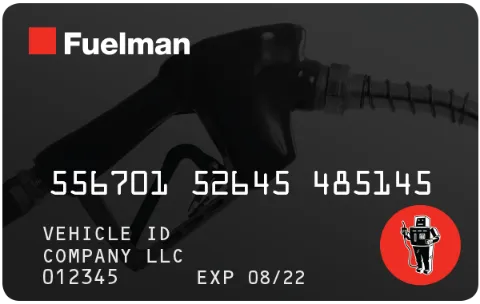
3. Fuelman
Fuelman offers three fuel credit card options.
The Mixed Fleet and Diesel Fleet cards offer savings of 8¢ per gallon on unleaded or diesel, or 12¢ per gallon on diesel, at more than 40,000 stations in the Fuelman network. Fleets that want broader acceptance can choose the Fuelman Mastercard, which provides 3¢ per gallon on unleaded and diesel anywhere Mastercard is accepted.
You can track spending by driver or vehicle, set product and dollar limits, shut off cards in the mobile app, and receive real-time alerts for suspicious usage. You also get fraud loss coverage up to $10K per card and $25K per year.
- Real-time fraud alerts
- Discount network
- Fuel controls
- Some options like customizable dashboards, maintenance, or fraud guarantee are only available on more expensive plans
- Invoices must be paid in full and on time in order to receive rebates
- Extended network fee of $3 for stations outside of their network
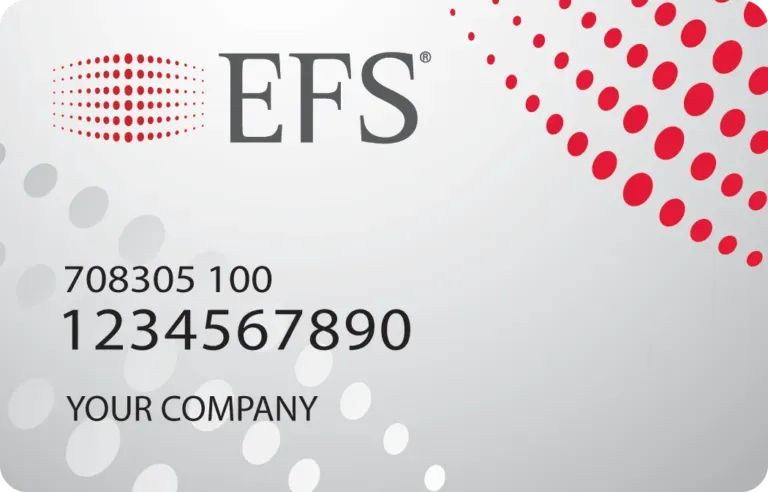
4. EFS
EFS fuel credit cards line up well against different fleet needs. The EFS Fleet Card suits operations that want strict spend rules, driver and vehicle prompts, and job-code tagging.
The EFS Fleet Mastercard extends those same controls to the entire Mastercard network.
CrossRoads Freight Card is designed for mixed-fuel fleets. It unlocks fuel discounts at 12,000+ truck stops across North America and at 95% of retail gas stations.
And if you’re running a smaller fleet operation, the Fleet One EDGE card offers a lighter setup with built-in discounts on fuel, tires, and repairs.
Pricing is contract-based, and rebate levels vary by network; fleets should review estimated savings for their usage patterns. Some advanced analytics and program controls sit behind higher-tier plans.
- Valuable features for trucking businesses, such as cash advances and ATM withdrawal
- Mastercard product can be used for fuel and fleet expenses where Mastercard is accepted
- Spend controls
- Limited network of 12,000+ gas stations, if not using the Mastercard product
- Applies transaction fees to merchants out-of-network for EDGE card
- Might not be as valuable for non-trucking businesses
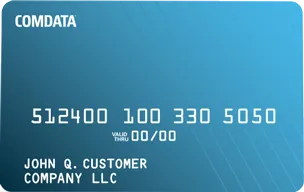
5. Comdata
Comdata offers fuel cards for any fleet size, including those moving toward EV charging and dual fueling.
Large fleets get advanced tools with Comdata, including the OnRoad Card for large fleet spending and driver funding. That ecosystem expands with the Comdata Mastercard. It gives you one simple way to pay for fuel, electric charging, and vehicle maintenance.
If diesel is your main expense, the Comdata Fleet Card rounds out the lineup. You get detailed reporting, spend controls, 24/7 driver support, and access to 8,000+ fueling locations, including Pilot, Loves, TA Petro, and AMBEST.
- Accepted at 95% of gas stations
- Advanced spend controls
- Customizable report options
- If you don't have a trucking business, you might not see the full value of the card
- Limited network of 8,000+ gas stations, when not using the Mastercard product
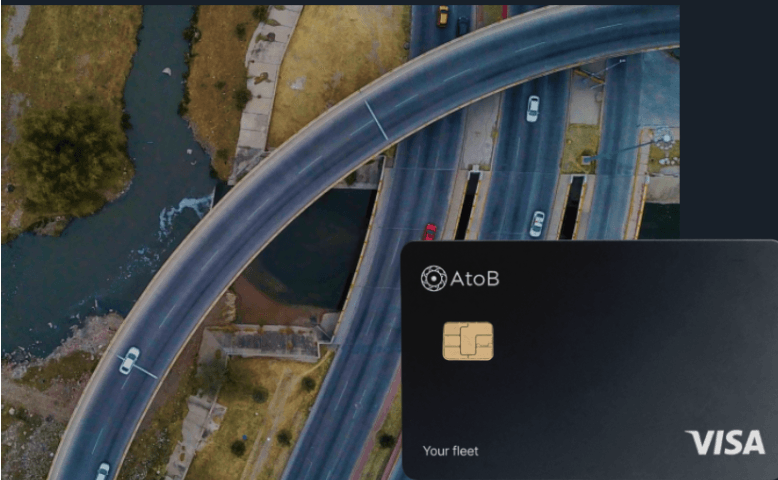
6. AtoB
AtoB supports every type of operation, including local fleets, over-the-road trucking, and mixed fleets. You can fuel anywhere Mastercard is accepted and access 30,000+ fuel stations and 4,200+ truck stops.
You can set per-transaction caps, weekly limits, and operating hour rules to help control spend. Merchant whitelisting and blacklisting give you another layer of control, and cards can be shut off instantly when something looks off.
You can also use the Driver Payroll Card for paying wages and incentives.
- One card for all types of fuel and EV charging
- $250,000 fraud protection guarantee
- $35 account setup fee
- Advanced features require additional fees
Related read: AtoB fuel card reviews (real user takes)

7. Motive
Motive Fleet Card blends spending and fleet management into a single system. You can use it anywhere Mastercard is accepted and pair it with telematics and spend controls so every purchase follows your fleet’s policies.
The card can automatically flag fuel-to-tank-size mismatches and alert you when vehicle and purchase locations don’t line up. You can freeze cards and rely on Motive’s fraud-protection guarantee of up to $250,000 per year.
Motive gives you a savings network of 35,000+ partner locations, including major truck stops and retail outlets like Love’s, TA, Casey’s, and 7-Eleven.
Automated IFTA reporting combines mileage and fuel purchase data so you can file in seconds. With customizable controls by amount, day, time, merchant, and spend type, the card gives fleets tighter oversight without adding admin load. Smaller fleets may prefer to review terms in advance since pricing isn’t listed upfront
- Tier-1 discounts on diesel at truck stops
- Integration between Motive's telematics and fuel card
- Spend controls
- Most rebates are on diesel, so you might not realize the full value if you operate gas vehicles
- Fuel fraud guarantee doesn't cover fraud by employees
8. Shell
Shell’s fuel credit cards give fleets a simple way to manage fuel, charging, and on-the-road expenses. With 12,000+ Shell stations nationwide, drivers can refuel without detours, while managers track fuel transactions through Shell Fleet Hub. You can set limits by day, time, product, or station, and smart alerts can flag unusual activity early.
They offer two fleet gas cards. The Fuel Rewards Mastercard works at Shell stations and anywhere Mastercard is accepted, with higher rebates at Shell stations.
The Fuel Rewards Credit Card is Shell-only and offers the same introductory savings and ongoing discounts at Shell stations.
- Attractive rebates at Shell stations
- Option to choose between a Shell only card, and a card with 95% coverage
- Supports EV charging
- Rebates based on the number of gallons purchased. Small fleets might have trouble getting the full value.
- Shell Card Business can only be used at Shell stations

9. Exxon Mobil
Exxon Mobil offers a lineup of business fuel credit cards for both individuals and fleets.
Their FleetPro Card supports diesel and mixed-fuel fleets with access to 12,000+ Exxon Mobil locations, including 700 truck stations. It offers custom, diesel-focused discounts to help trim operating costs.
The BusinessPro card increases network flexibility while tightening expense monitoring. You can earn rebates and fuel at 95% of U.S. retail fuel stations.
- Attractive rebates at Exxon and Mobil stations
- Spend controls and reporting
- Exxon only card has no setup, card or annual fees
- Unless you select their universal program, the card only be used at Exxon and Mobil stations
- If you want to get acceptance outside Exxon stations, you will need to upgrade to their Universal card, which has card fees
- Reliance on driver PINs leaves cards susceptible to fraud
10. Chevron and Texaco
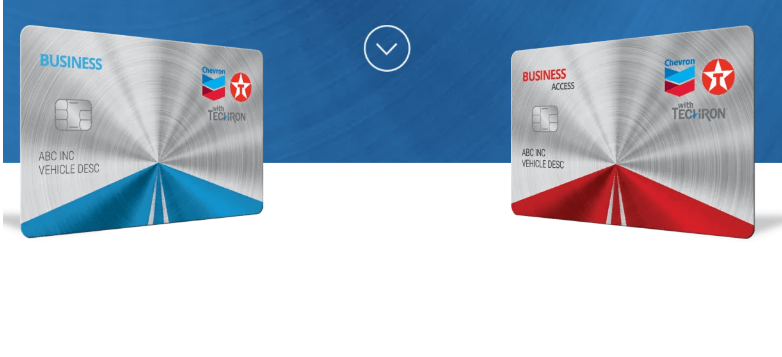
Chevron and Texaco business fuel cards help fleets track expenses, control purchases, and eliminate paperwork. Every purchase captures driver IDs, odometer readings, and full line-item data at nearly 8,000 Chevron and Texaco stations. Automatic, paperless accounting and mobile account tools make daily operations much easier.
You have three clear options. The Business Card is for fleets that keep fueling local, with no setup or annual fees. The Business Access Card expands acceptance to 95% of U.S. fuel stations and offers volume-based rebates. The Business Access Flex Card adds the same nationwide reach and rebates.
- Rebates at Chevron and Texaco stations
- Flexibility to choose between a Chevon/Texaco only card, and a card with 95% coverage
- Spend controls and reporting
- Rebates based on the number of gallons purchased. Small fleets might have trouble getting the full value.
- Chevron Business Card can only be used at Chevron and Texaco stations.
- Business Access Card charges $2/transaction fee when used outside of Chevron and Texaco stations
Managing EV charging too? See our guide to the best electric fuel cards for fleets.
Choosing Your Business Fuel Credit Card: Key Considerations
The right fuel credit card gives you real-time control, wide station access, and gives finance clean data. The wrong one adds fees, restricts routing, and hides misuse until it’s too late. No surprise that 18% of fleet managers deal with lost or stolen cards, and unauthorized expenses can reach up to 12% of total fuel costs because of weak controls.
The checklist below will help you compare the best credit cards for fuel on this list and pick the one that fits how your fleet fuels and spends.
- Responsive customer service: Don’t overlook customer support while comparing features. Look for teams that respond fast, understand fleet operations, and give you multiple ways to reach them.
- Strong security measures: Look for fuel credit cards with driver IDs, odometer prompts, real-time fraud alerts, and instant lock or unlock controls. Pair that with non-negotiable security like EMV chips, PIN/driver verification, and secondary activation checks tied to a driver’s device. Together, these controls make stolen, skimmed, or misused cards worthless to bad actors.
- Open-network acceptance: Closed-loop cards restrict where drivers can fuel. Open-loop cards allow drivers to fill up wherever work takes them. This flexibility reduces detours and keeps operations predictable.
- Payment terms: Match the billing cycle to how your business runs. Look for terms that preserve cash flow and don’t lock you into schedules that clash with payroll or receivables.
- Integrations: Your gas credit card should push coded transactions straight into accounting systems, sync with telematics, and connect with your fleet management tools without manual work. These links can save you hours as your business scales.
- Fuel rebate rules: Don’t chase the biggest discount per gallon. Choose cards that deliver consistent per-gallon savings across the routes your fleet actually takes.
- Hidden costs: Out-of-network charges, transaction fees, or processing fees can erase savings fast. Ask directly about all fees before you sign up. Avoid cards that bury critical charges in fine print or tie low pricing to unrealistic usage patterns.
- Spend controls: Choose fuel credit cards that let you set rules by amount, time, fuel type, and merchant. Some even enforce tank-size logic to block overfills. Prioritize platforms with intuitive dashboards to adjust limits instantly and maintain oversight.
- Expense management: Strong gas credit cards for business give finance a single place to track fuel, maintenance, and field spend, replacing messy expense reports entirely. That’s why consider choosing cards with automatic coding and no manual reconciliations.
Curious what the right card could save you? Use our calculator to see how quickly tiny per-gallon savings turn into big wins.
Why Pick Coast For Your Fuel Only Credit Card
Coast is built for fleets looking for a fuel-first card without compromising control, visibility, or flexibility. It runs on the Visa network, meaning your drivers can fuel anywhere Visa is accepted. Plus, you can lock the card down to fuel only or fuel and maintenance with category-level rules. It also shows transactions in real time, and you can decide who can spend, where, when, and on what.
- Fuel-only control on the Visa network: Coast combines wide Visa acceptance with fuel-only controls. You can limit cards to gas stations, diesel, or fuel and approved fleet categories, and toggle other merchant types off entirely. That lets you enjoy the credit card anywhere Visa is accepted, without opening the door to snack, gift card, or personal spend.
- Advanced fraud prevention: Coast layers EMV chip security, driver verification, custom rules, and real-time alerts so misuse can be blocked at the pump.. Telematics integration can auto-decline or flag out-of-position transactions. Plus, Coast backs this with a fuel credit card fraud guarantee of up to $25,000 per year when recommended controls are enabled.
- Real-time data: Every swipe hits the dashboard within seconds with gallons, grade, time, and location. You can slice spend by driver, vehicle, crew, or job, track MPG and cost per mile, and export data straight into your accounting stack.
- Integrations: Coast connects with QuickBooks, NetSuite, Sage Intacct, Samsara, Geotab, Verizon Connect, Fleetio, and more. Fuel transactions sync with your accounting, telematics, and maintenance tools, so every fill is tied to a vehicle, location, and project.
- Simple pricing and meaningful rebates: Coast charges a flat monthly fee of $4 per active card user. You get consistent per-gallon discounts (between 3-9¢/gal at 30,000+ partner stations) plus base savings everywhere else, without hitting arbitrary volume tiers.
- Fuel card today, expense platform tomorrow: Start with Coast as a fuel-only credit card and then expand. Coast lets you turn on categories like parts, tolls, and travel, with more controls than a corporate card. That way, you don’t outgrow your fuel program the moment you need to manage broader field spend.
If you want a fuel-only card that still works everywhere your fleet does and gives finance audit-ready data, Coast is built for that job. Start an application when you’re ready.
Fuel Credit Card FAQs
Got questions? We got you covered!
What is a fuel credit card?
A fuel credit card is a business payment card for managing fuel and fleet-related expenses. It allows you to purchase fuel, capture transaction data, and enable spending rules that match company policy. Unlike personal credit cards, it tracks details like gallons, fuel grade, odometer readings, and driver or vehicle IDs to help operations and finance teams monitor usage in real time.
What are the benefits of using fuel credit cards?
Fuel credit cards help fleets control costs, prevent misuse, and simplify reconciliation. They show transactions instantly, provide per-gallon savings at partner stations, and offer controls that block unauthorized purchases. These cards also integrate with accounting, telematics, and fleet management systems to tie back every purchase to the right vehicle and job.
How is a fuel business credit card different from a regular business credit card?
A fuel business credit card is designed for operational control rather than general-purpose spending. It captures line-item data like gallons, price per gallon, fuel type, location, driver ID, and other details that regular business credit cards can’t provide. It also helps prevent misuse and unauthorized transactions using rules like fuel only, gallon caps, time-of-day limits, and geofencing. A standard business credit card lacks these controls and only provides high-level monthly statements with no operational context.
What is the best business credit card for gas?
The best fuel card is the one built for how your fleet runs. Coast gives local fleets the edge with Visa acceptance, tight controls, and powerful fraud blocking. Traditional brand-linked cards still help fleets that refuel within one network and care most about volume rebates. But the smartest choice is always the card that fits your fueling patterns and control needs.
Where can a fuel credit card be used?
Usage depends on the card type. Closed-loop cards work only at specific brands, like Shell or Chevron and Texaco. Open-loop cards, usually Visa or Mastercard, work at most fuel stations and maintenance and service locations. Cards like Coast also support non-fuel spend categories like parts, tolls, and emergency repairs when you enable them.
How do we ensure the credit card can only be used for fuel?
Fuel-only use starts with category controls. With Coast, you can disable every non-fuel merchant category and allow only gas-station codes or specific fuel types. Driver IDs, odometer readings, and location checks add a second layer of protection, meaning non-fuel attempts are auto-declined.