
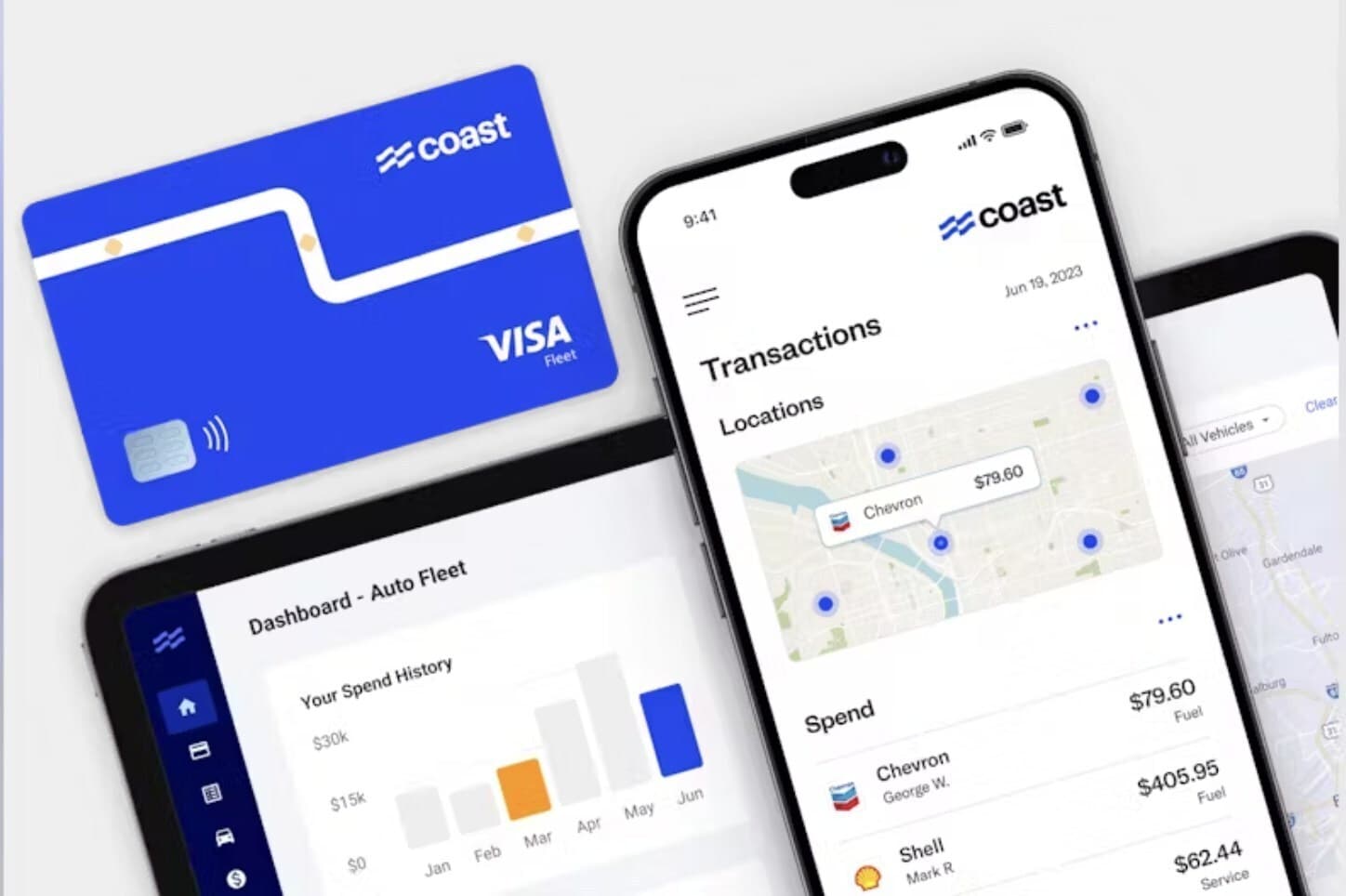


Our team had a blast on the ground in Las Vegas attending the annual Samsara Beyond Conference. We played TopGolf with customers, attended countless interesting sessions, we sang along to Jake Owen at the Beyond Bash, and proudly walked away with the Rising Star Partner of the Year award from Samsara. But the best part was just getting to talk to real customers and fleet operators in person. We look forward to this conference every year!
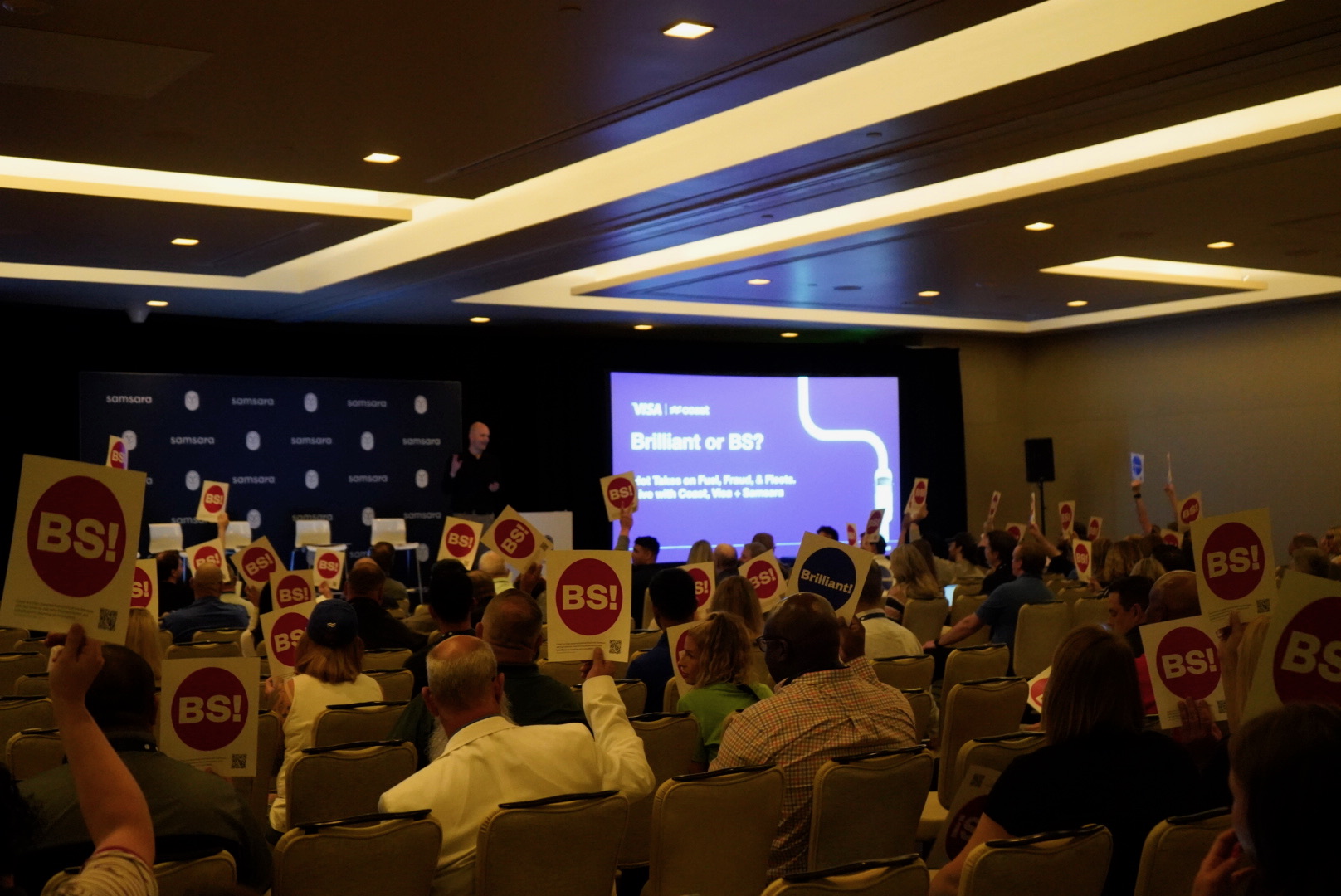
We were also able to get on stage for a panel session, and it was a true highlight. Instead of a tidy keynote with a slide deck to go through, we put four bold predictions about fleet ops in front of the room and asked everyone, panelists and audience alike, to hold up a paddle: Brilliant or BS?
The panel brought together people who see this from very different seats. Mike Zananiri runs safety for Texas Enterprises, a fuel hauling operation of roughly 130 vehicles across Texas. Kristen Fedder leads fleet operations for Strada, an HVAC, electric, and plumbing services company running well over a thousand vehicles from Florida to Nevada.
It also included Daniel Simon, Coast’s CEO, Undine Rubeze, who leads the fuel products team at Samsara, Nareg Guregian, Visa’s Fleet Partnerships Director for North America, and Christian Rennie, Coast’s VP of Sales as the moderator.
What came out of it was less about who was right and more about how fast the ground is shifting under fleet operators, and where it genuinely is not. A few of the most experienced people in the room admitted, on stage, that they had changed their minds. It was a brilliant (pun intended) room to be a part of. But for those who weren’t able to join us on the ground, or who just want a refresher, we summarized the best pieces below.
Starting with topic number one:
“Rising fuel prices are just the cost of doing business. Don’t change a thing.”
The paddles went red almost before Christian finished reading it. A wall of BS.
The reason became clear quickly. When fuel gets expensive, the small leaks stop being small. As Daniel put it, “waste and inefficiency and abuse that you might have tolerated when fuel price was cheaper actually starts to add up to being a really meaningful difference for the bottom line.”
And the abuse rises right along with the price. Undine shared a stat from Samsara’s own data that landed in the room: “For every 10 cents that diesel goes up per gallon, we see a 9% increase in fuel fraud that people are detecting.” Higher prices, more incentive to skim, top off a personal tank, or sell a few gallons to the car behind you in line.
The operators on the panel were already pulling levers. Mike leaned on culture and incentives, with drivers on profit sharing who feel every dollar. “We’ve kind of turned it into a game internally,” he said, “kind of like what we did with the safety scores.” Kristen used Coast to switch off the most expensive stations and pushed her branch managers to steer toward higher rebate locations close to each shop.
From the product side, the message was that detection after the fact is not enough. Daniel described stopping a transaction when a vehicle’s GPS is nowhere near the pump, declining a fill when the real-time tank reading is already 80 or 90 percent full, and dynamically blocking stations that are priced well above others nearby. Nareg made the case for the card itself: a Visa fleet card built on the EMV chip kills skimming on a tap or dip, and universal acceptance means a driver is never boxed into one overpriced brand. “The beauty of the Visa card,” he said, “is it’s accepted anywhere Visa is accepted.”
After gas prices, we were on to topic number two, one of the buzziest topics and largest room splits of the session:
“In five years, AI will run your fleet’s day-to-day. Your job is to supervise it.”
Immediately there was a mix of Brilliant and BS paddles in the air, so split it was hard to determine a majority. A split panel along with it!
Kristen went first and did not hide it. “First of all, I hope not, because I don’t want to be out of a job.” She uses AI today for routing and last mile dispatch, and relies on Samsara to keep drivers safe, but she draws a hard line at letting it decide on its own. “I want my supervisors out there actually looking at the videos that are getting flagged by Samsara,” she said, so a coach can explain to a driver later why an event mattered.
Daniel put himself at 50-50 and made the point that grounds everything Coast is building, that AI earns its keep when it gives people their time back rather than when it pretends to replace the work. “As helpful as ChatGPT is,” he said, “it’s not going to power wash a driveway anytime soon.” Coast is using it to classify transactions and read receipt images, catching the pack of cigarettes rung up next to the wiper fluid, so an operator spends less time policing and more time running the business. Undine described Samsara’s approach the same way, “giving people time back, because that is what we hear from our customers,” with full automation as something the team intends to earn gradually.
Nareg, opened with a joke, “I love questions where they ask you what’s going to happen in five years, because you have five years for people to forget your answer if you’re wrong”, but then changed the question on himself. He looked five years backward instead of forward. “Five years ago, would we have thought AI was doing what it is today? My answer is no.” That humility moved him to vote brilliant. He sees AI like modern aviation, where pilots still own takeoff, landing, and emergencies while autopilot handles the rest, and flying has never been safer.
Then, the conversation shifted from speculation to something the majority has felt, driver adoption. Change is tough, should operators expect turnover when rolling out new tools? The next topic stated:
“Roll out a new app or telematics and you should expect to lose 5% of your drivers.”
And while the room was mostly red, there was a few folks in the room who agreed with this sentiment.
Mike was told to brace for 5 to 10 percent attrition when his prior organization rolled out cameras. “We actually experienced zero loss,” he said. The turning point was trust. After a fatality collision, the camera footage exonerated his driver, and he has since won an arbitration on a separate incident using the same approach. When drivers see the technology protect them, support follows.
Kristen took a blunter path (“you’re on board or you don’t work here”) and arrived at the same place. She told the story of a driver who had a medical event, his knee locking onto the accelerator until the truck hit a retention pond and the side of a house. Without the camera, she said, “it probably would have been classified as alcohol or drugs.”
Daniel’s view was that adoption is the provider’s problem to solve, not the driver’s burden to absorb. Coast meets drivers over both app and SMS because everyone texts, and when a card declines it tells the driver exactly why and lets them request an exception that routes to a manager instantly. The goal, in a phrase he borrowed from a customer conversation, is to “let the honest people be honest.” Undine described it as Samsara’s two jobs at once, enforcing the business’s policy while keeping drivers happy, and noted how often those goals agree: a camera that clears a driver, or an idling reminder that earns one a bonus.
Finally, we returned once more to a prediction of the future with topic 4:
“In five years, fleets won’t carry fuel cards. It’ll all be virtual.”
The room leaned brilliant, but with real holdouts. And this is where the best change of heart happened, live.
Mike admitted that in the prep sessions he had called it BS. Then something happened at his other job. He serves as an EMT on a community paramedic team in Blanco County, Texas, and before his physical card arrived he needed to buy medication for a patient. The virtual card in his wallet worked on the spot. “It’s coming quick, the virtual cards,” he said, while still confessing a fondness for “holding a card in my hand.”
Kristen wants virtual for a concrete operational reason: it ends the ritual of shipping plastic across the country to whichever branch manager needs it. Her open question is acceptance in the rural stretches her crews work, which depends on the stations themselves. Nareg, predictably bullish, predicted that within five years many fleet managers will issue digital cards first and keep plastic as a backup, pointing to the Apple Pay and Google Pay support Visa has launched for fleet cards.
Daniel closed the form-factor debate by making it practical. With Coast, a driver can text a keyword or tap a button and have a virtual card in their wallet immediately, governed by the same policies as plastic, so a 1,500-vehicle program can go live the same day without shipping a single card from headquarters. He was candid about the limit, too: gas-pump point-of-sale systems are slow to upgrade, so “with a purely digital solution even today, you can work in nine out of ten places,” and Coast still recommends a plastic backup for the rest.
Where the conversation actually pointed
The thread running under all four predictions was visibility, and the announcement that Coast is now the only fuel card embedded directly inside Samsara made it concrete. Fuel policies live in the same platform as the telematics, purchases appear on the Samsara dashboard within minutes, and location and tank-size data stop suspicious transactions at the moment of purchase.
Daniel said the reason plainly: “Payments is a part of running fleet operations. And Samsara is a platform that is an operating system for your fleet.” When fuel data and vehicle data sit in one place, a manager is not just watching a card. They are seeing spend against the real picture of the truck.
The predictions shared will age however they age. The most telling thing about the session was not the votes. It was how many seasoned operators changed their minds out loud. Kristen advocated the uses for virtual cards but admitted to not using them. Nareg talked himself from skeptic to believer on AI by remembering how little he predicted five years ago. Mike walked in calling virtual cards BS and walked out saying “it’s coming quick.” That is the actual signal for fleet leaders: the people closest to the trucks are not betting against this technology, they are figuring out how fast to lean in.
Learn more about the Coast & Samsara Embedded Experiance